





Voir l'article

1

Ressources
complémentaires

L’avortement dans l’UE et aux États-Unis

La possible restriction du droit à l’avortement aux États-Unis invite à un tour d'horizon européen sur la question.

Voir l'article

1

Ressources
complémentaires

Petite « mondialisation entre amis » ?

Les récents chocs économiques et géopolitiques invitent dirigeants et entreprises à repenser la mondialisation.

Voir l'article

Conseil lecture : Les 100 concepts de la géopolitique

Une précieuse ressource à picorer ou à dévorer d'une traite !

Voir l'article

1

Ressources
complémentaires

Maritimisation de l’économie et développement

La désorganisation du transport maritime menace le développement des pays pauvres. 

Voir l'article

1

Ressources
complémentaires

[Géographie] Il fait bon vivre dans nos campagnes !

Cet article expose les facteurs de l'attractivité croissante des espaces ruraux et des défis auxquels ils sont confrontés.

Voir l'article

1

Ressources
complémentaires

Les inégalités en Afrique du Sud

La récession économique et la pandémie ont creusé les inégalités au sein de la population sud-africaine.

Voir l'article

1

Ressources
complémentaires

Le parfum, une filière mondialisée

Fortement mondialisée, la filière du parfum est sensible aux aléas climatiques et géopolitiques. 

Voir l'article

1

Ressources
complémentaires

[HGGSP] Que nous apprend l'histoire sur la guerre en Ukraine ?

Une vidéo accompagnée de cartes répondre aux questions de vos élèves sur la guerre en Ukraine.

Voir l'article

1

Ressources
complémentaires

L'expansionnisme russe : la guerre en Ukraine (2022)

Un dossier inédit sur la guerre en Ukraine. 

Voir l'article
Logo de la revue d'appartenance Speakeasy

Earth Day 2022

April 22 is Earth Day and its organisers are encouraging us all to "invest in our planet", the theme of this year's event. It certainly needs us all to pay more attention to its needs. Earthday.org and NASA provide lots information and teaching tools to engage students and offer practical actions to take.

Voir l'article

Les espaces productifs en France

Un jeu en ligne pour découvrir différents espaces productifs en France.

Voir l'article

1

Ressources
complémentaires

Méfiez-vous des classements des villes !

Ce podcast explique la difficulté de faire un classement des villes à l’échelle mondiale. 

Voir l'article

1

Ressources
complémentaires

Le Maroni, un fleuve frontière en Guyane

Cet article expose les enjeux de la frontière entre la Guyane et le Suriname, et les dynamiques du territoire transfrontalier. 

Voir l'article

1

Ressources
complémentaires

La frontière Guyane-Suriname

Quels sont les enjeux géopolitiques impliqués dans cette frontière ultramarine de l'Union européenne ?

Voir l'article
Logo de la revue d'appartenance Speakeasy

Historic Supreme Court Nomination

On 7 April, the U.S. Senate confirmed the nomination of Judge Ketanji Brown Jackson as a Supreme Court Justice — the first ever African-American woman in the court's 233-year history. Despite hostile Senate hearings, three Republican Senators gave their votes to confirm the nomination.  When he fulfilled an election promise by nominating Ms. Brown Jackson, President Biden explained, “For too long our government, our courts haven’t looked like America.” President Biden nominated Ms Brown Jackson after Justice Stephen Breyer announced he would retire this summer. Supreme Court Justices are appointed for life. They are nominated by the President but have to be confirmed by the Senate. Breyer is currently one of three “liberal” Justices along with six “conservatives”. Presidents generally nominate Justices associated with their own politics, so liberal Brown Jackson was a logical pick for Biden. Since the Senate is currently split 50-50 Republican and Democrat, the nomination was likely to pass, as Vice-President Kamala Harris has a casting vote. In the event, three Republican Senators “crossed the aisle” to support the nomination. If any Democratic Senators lose their seats at the Midterm elections in November, this may be Biden’s only opportunity to have a nominated judge confirmed. Justice Brown Jackson Brown Jackson,51, has had a long career in many aspects of the justice system. She was brought up in Florida, and  pointed out in her confirmation speech t hat her family has gone from segregation to Supreme Court Justice in one generation. Both her parents were teachers. Her mother went on to be a school administrator. Her father went to law school when Brown Jackson was a child, inspiring her to follow in his footsteps She studied at Harvard and was was editor of the Harvard Law Review like one of her role models, Barack Obama. After law school, she worked as a clerk for Justice Stephen Breyer, a public defender and a defense attorney in private practice. She served as a District Court Judge before joining the DC District Court of Appeals last year. When President Obama was nominating a Justice in 2016, Brown Jackson’s the-11-year-old daughter wrote to him asking to add her mother to his list. In over 200 years, 120 Justices have served on the Supreme Court, 115 of them men and 117 white. The first woman, Sandra Day Connor, was only appointed in 1981. The first African American Justice was Thurgood Marshall, appointed in 1967 by President Lyndon Johnson, after he led the NAACP case in Brown Vs Board of Education, the landmark ruling on school desegregation. Defenders vs. Prosecutors Marshall was also the last Justice before Brown Jackson who had experience as a public defender — a lawyer appointed by the courts to defend the accused. Of the judges in the U.S. court system as a whole, former prosecutors outnumber defense attorneys by four to one according to a recent study by the Cato Institute . It could be argued that having preponderance of judges whose principal experience is on one side or the other of the prosecution-defence divide can skew the system in one direction.  Some of the most aggressive and hostile questioning Brown Jackson faced from Republican senators during the confirmation hearings was about her time was a public defender, implying that by defending criminals she somehow sided with them. You can find more on  the need for reform in the U.S. justice system in Shine Bright AMC File 15 Justice for all?

Voir l'article
Logo de la revue d'appartenance Speakeasy

The Invictus Games are Back

The Invictus Games for injured and sick military personnel and veterans was founded by Prince Harry, himself a veteran, in 2014. The Invictus Games 2020, the fifth edition, are finally being held from 6 to 13 April 2022 in the Hague, Netherlands. More than 500 participants from 20 countries will compete. As importantly, they will be accompanied by friends and family who have helped them in their recovery. Prince Harry was inspired to create the games after attending the Warrior Games in the U.S.A. He wanted to take the concept of helping service personnel in their recovery through sport, but add an international element, bringing together athletes from around the world. The first event in London in 2014 surpassed even the organisers’ hopes, showcasing inspiring stories of resilience from the athletes. https://youtu.be/PpnYcXJVWNM The Games’ motto is a neat variation on Julius Caesar’s “Veni, vedi, vici” (I came, I saw, I conquered): We came. We saw. We are unconquered. That chimes with the poem “Invictus” which inspired Nelson Mandela in prison, and which gave its name to the games. William Henley (1849–1903), the poet, knew what it was like to suffer from ill health – he developed tubercular arthritis as a teenager and had to have a leg amputated. Christ Martin from Coldplay took the last lines of the poem as the chorus to the anthem he wrote for the Games: I am the master of my fate, I am the captain of my soul. [embed]https://youtu.be/XFM5dgPoLrE[/embed] In the Hague , 500 competitors will participate in one or more out of the ten sports: athletics, archery, cycling, indoor rowing, a driving challenge, powerlifting, sitting volleyball, swimming, wheelchair basketball, and wheelchair rugby. Competitors are using sport to help them recover from both physical injuries and the effects combat can have on mental health. Prince Harry is still very much involved in the Games, as can be seen in this tongue-in-cheek  video of him trying to learn some Dutch before the opening ceremony. [embed]https://youtu.be/N_Zu0vd0g5M[/embed] The next games are planned in Düsseldorf, Germany, in 2023.   You can find a whole SnapFile on the Invictus Games in Shine Bright Terminale: Snapfile 21.

Voir l'article
Logo de la revue d'appartenance Speakeasy

Spies Fooling Spies

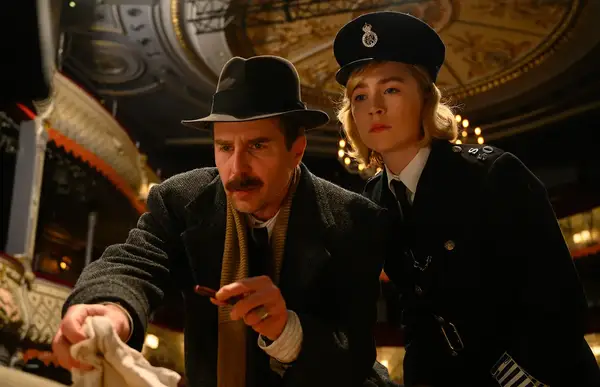
A new film details a barely believable operation from World War II involving a dead body designed to fool the Nazis about Allied invasion plans and save the lives of thousands of soldiers. The success of Operation Mincemeat hinged on creating a carefully crafted fiction, which is where James Bond author Ian Fleming came in. Fleming hadn’t created Bond yet, he was an espionage officer in the British military. In 1943 Allies were planning to invade the Italian island of Sicily to open a new front.  But trying to invade a heavily defended island meant risking heavy casualties — men disembarking from small boats would be easy targets. To make things worse, the Allies believed the Axis forces had obtained some intelligence about the plans. It was essential to divert attention from Sicily to other possible invasion points. And so a group of spies came up with a plan to plant a dead body which seemed to be carrying confidential plans to invade Greece instead. The body would be dumped in the sea off the Spanish coast in the hope that Nazi agents in the non-aligned country would get wind of its discovery. Nothing was certain in this scenario — the body could disappear, or not come to the Nazis’ notice. But if it was found, the Allied espionage team were determined that their plant would be as believable as possible. A body with nothing in it except a uniform and top-secret papers would raise suspicions. So the spies set out to create a life story for the corpse, and leave clues on his body. Mundane things like a  receipt for an engagement ring or a theatre ticket dated in the right time frame for someone coming from London as a message courier. A photo of his girlfriend. The tiny signs of civilian life that all of us carry around. Several of the team working on the subterfuge were amateur or published authors. Among them, Ian Fleming, who would go on to write the James Bond novels after the war (and help found the CIA.) Although this operation, based in a dingy London basement, was far from the glamour of Bond’s missions, it required all of Fleming’s imaginative skills to transform the corpse of a homeless man into “Major William Martin”. https://www.youtube.com/watch?v=YQ7ZXOXHZ20 This short video from the National Archives shows some of the documents and artefacts from the real Operation Mincemeat. https://youtu.be/XX7Jy0FX278?t=17 Operation Mincemeat On general release 27 April.   You could link this film with Shine Bright 3e SnapFile 1 Join the Spy School.

Voir l'article

Conseil lecture : Quand la géo explique le monde

Thibaut Sardier, Quand la Géo explique le monde. 30 phénomènes que vous ne connaissez pas encore, Éd. Autrement (2020)

Voir l'article
Logo de la revue d'appartenance Speakeasy

The Big Jubilee Read

Do some armchair travelling with the Big Jubilee Read: a list of 70 books, ten for each decade of Queen Elizabeth II’s record-breaking reign. As befits its head, the authors and settings range all over the Commonwealth: representing 31 countries on six continents. It includes eight Nobel Literature Laureates, and a lot of Booker Prize winners.

Voir l'article

Cartoprodig : l'outil incontournable des géographes !

Le CNRS a mis au point la plateforme Cartoprodig, un atlas en ligne à consulter et à télécharger librement ! 

Voir l'article

Conseil lecture : Voyage au pays des Ouïghours

Sylvie Lasserre, Voyage au pays des Ouïghours. De la persécution invisible à l'enfer orwellien, Éditions Hesse, 2020.

Voir l'article

1

Ressources
complémentaires

La guerre et le système monétaire international

L’invasion russe en Ukraine pourrait accélérer les transformations du système monétaire international.

Voir l'article
Logo de la revue d'appartenance Speakeasy

They Spoke and They Conquered

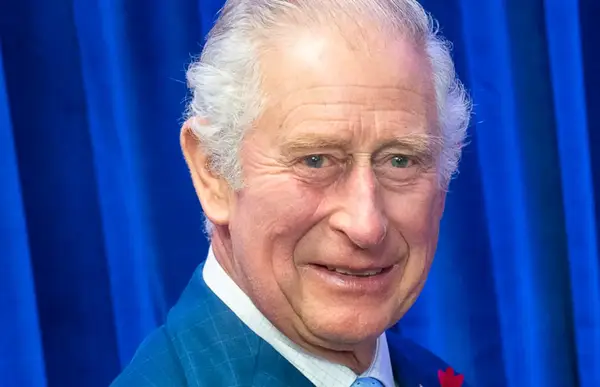
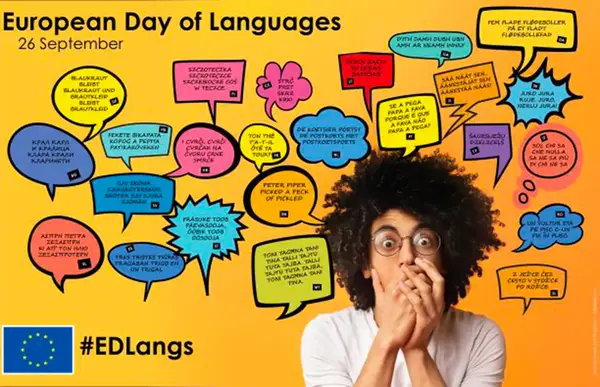
Back in January, we announced this year's Cicéronnades competition organised by the Académie of Orléans-Tours, which enncourages pupils to video themselves reciting a poem or prose text. The winners have just been announced, as part of la semaine des langues vivantes.  The Académie of Orléans-Tours is organising a competition for pupils to recite texts in the languages they are learning, which is open to pupils and students (up to the third year of university) all over France and in lycées français abroad. For its second year, the competition, open to pupils and students (up to the third year of university) all over France and in lycées français abroad, covered a wide range of modern languages (Arabic, Chinese, English, French as a foreign language, French as a second language, German, Italian, Japanese, Portuguese, Russian, Spanish and Turkish) as well as ancient Greek and Latin. Individual pupils make a simple video of themselves reciting their text. The deadline for entries is 11 March 2022, and the winners will be announced on 8 April. For secondary pupils, there were set texts, one a poem and the other a speech. For collège (cycle 4)  , the poem was by Victorian poet Ernest Dowson, tled in Latin "Vitae Summa Brevis Spem Nos Vetat Incohare Longam" . For lycée it is William Shakespeare's sonnet number 12, "When I Do Count the Clock that Tells the Time". For c ollège pupils the speech was one given by a young Ugandan climate justice activist, Vanessa Nakate, at a conference on Earth Day 2021.  For lycée , pupils could recite a speech made by Britain's Prince Charles to the COP21 conference in 2015. For collège , the three winners in English are: First prize: Eléa Schott-Barta, Collège Paul-Louis Courier, Tours. Second prize: Fiona Tuvee, Collège Victor Hugo, Puiseaux Third prize: Jean-David Carouée, Collège Pablo Picasso, Charette-sur-Loing And for lycée : First prize: Faustine Pareau-Deniau, Lycée Marceau, Chartres Second prize: Leopold Grindel-Chollet, Lycée Thérès Planiol, Loches Third prize: Maëlle  Gombart-Roze, Lycée Maurice Genevoix, Ingré Congratulations to all of you! You'll find the winners in the different languages and levels as well as all the texts for contest on the Académie Orléans-Tours website  .  

Voir l'article

1

Ressources
complémentaires

La France et le monde : une puissance déclassée ?

Dans un monde en transition régi par de nouveaux rapports de force internationaux, la France peine à affirmer son leadership.

Voir l'article

1

Ressources
complémentaires

Londres-Paris : concurrence et complémentarité

Ce podcast détaille les principaux facteurs et enjeux de la compétition entre Paris et Londres.

Voir l'article

1

Ressources
complémentaires

L’Inde devient-elle un État antidémocratique ?

En 2020, l'Inde met en place une loi qui accorde la nationalité sur des critères religieux. Quelles en sont les conséquences ?

Voir l'article

1

Ressources
complémentaires

Les États-Unis et le climat : l'économie d'abord

La lutte contre le réchauffement climatique est un enjeu majeur pour Joe Biden. Mais le principal critère demeure économique.

Vous avez vu 1170 résultats sur 2532