







Voir l'article
Logo de la revue d'appartenance Speakeasy

Sélection culturelle

Free Celtic Film Festival

The second edition of the Festival du film celtique will take place at the Cité internationale des arts in Paris on the evenings of 11 and 12 April.  Feature and short films from Scotland and Wales will be shown, with lots of opportunity to talk to filmmakers.

Voir l'article
Logo de la revue d'appartenance Speakeasy

Sélection culturelle

And the Oscar Winners Are…

The 2022 Oscar ceremony was memorable… But what about the winning films? Several of our favourite films of the last year came away with awards. And CODA beat off some favourites to take Best Picture.

Voir l'article
Logo de la revue d'appartenance Speakeasy

Sélection culturelle

Lyon: Crime (Fiction) Capital

France’s biggest crime-fiction festival is back at its usual time of year, 1-3 April, after a Covid-delayed edition in July 2021. For its 18 th edition it has a large roll-call of writers from France and around the world, including many from the U.K. and the U.S. Alongside stars like Harlan Coben, John Grisham and Paula Hawkins, you’ll also find the cream of Scottish noir: Val McDermid, Irvine Welsh, Abir Mukherjee, and the wonderful Chris Brookmyre. (If you don’t know his work, you don’t know what you’re missing!) If you haven’t discovered him yet, Richard Osman, comic turned bestselling crime author, who has set his books in an old-people’s community that has a Thursday murder club (the point being to solve cold cases, not to commit murders, although...) Alongside stars like Harlan Coben, John Grisham and Paula Hawkins, you’ll also find the cream of Scottish noir: Val McDermid, Irvine Welsh, Abir Mukherjee, and the wonderful Chris Brookmyre. (If you don’t know his work, you don’t know what you’re missing!) If you haven’t discovered him yet you can meet Richard Osman, comic turned bestselling crime author, who has set his books in an old-people’s community that has a Thursday murder club (the point being to solve cold cases, not to commit murders.) On Saturday at 2.30 p.m. there’s a presentation of a crime novel written by a binational duo of authors, one French and one German. It’s called Terminus Leipzig , by Jérôme Leroy and Max Annas. At 4.30 there’s an hour with John Grisham on the differences between the U.S. and French justice systems. Just time to get a few books signed in between! At 5 p.m., three American authors, Kimi Cunningham Grant, David Joy and John Woods, will discuss a region that fascinates them, the Appalachian mountains . And for a complete change of scene, a South African meal at 7.30 with three authors, Deon Meyer, Caryl Férey et Max Annas and a Cape Town chef. It’s worth getting up early on Sunday for a 9.30 cruise on the Rhine with Girl on the Train author Paula Hawkins . At 10.30, catch Val McDermid discussing the importance of place in crime fiction with French author Sonja Delzongle and Arnaldur Indriðason from Island. Or at 11, join a discussion about the modern “cosy” mystery (think Cluedo or Agatha Christie) with British authors S. J. Bennett and Richard Osman, and Jeon Gunwoo from South Korea. Would-be crime writers will have to choose between two events centred more on the technique of crime fiction at 2 p.m. on Sunday, one on suspense and the other on action . (The latter is a chance to meet Chris Brookmyre.) At 5, you can catch a discussion about using real historical characters in crime fiction with British authors S. J. Bennett and Abir Mukherjee,  Peter Dempf from Germany and Raphaël Malkin from France. There’s also space in the programme for film and TV adaptations. On Thursday at 7 p.m., Michel Barnier will discuss Hitchcock and suspense. On Friday 1 st at 3.45 p.m., a preview showing of Irvine Welsh’s TV series Crime , and a chance to talk to the Trainspotting author afterwards. [embed]https://youtu.be/pTGGUF4euTE[/embed] Don’t miss Daniel Craig in a very different role from Bond in Knives Out on Friday at 8.30: a crime film about the murder of a crime writer called Harlan. [embed]https://youtu.be/tn68kE6UkVQ[/embed] Talking of Harlans, catch Harlan Coben by video link for a showing of his “made in France” film Ne le dis à personne directed by Guillaume Canet, also on Friday at 8.30. Three of American director Michael Mann ’s urban crime films will be shown on Friday and Sunday, Thief, Heat and Miami Vice. There are lots more events, games, exhibitions and music. Check out the programme . Quais du polar 1-3 April at various venues in Lyon.  

Voir l'article
Logo de la revue d'appartenance Speakeasy

Sélection culturelle

Canadian Film Festival in Dieppe

Dieppe will be celebrating Canadian films, in English and French, from 24 to 27 March.

Voir l'article

1

Ressources
complémentaires

La fin du charbon en France

Pendant une semaine, une journaliste a suivi le quotidien d'employés d'une des dernières usines à charbon de France.

Voir l'article

1

Ressources
complémentaires

How does war affect the global economy?

This episode of AnalyzeThis! aims to explain what are the consequences of conflicts on the global economy.

Voir l'article

1

Ressources
complémentaires

Métropoles et gouvernance métropolitaine

Dans un contexte de fragmentation et d'étalement urbain, quelles sont les limites de la gouvernance métropolitaine ?

Voir l'article

1

Ressources
complémentaires

La puissance des géants du numérique

Véritables puissances économiques, les géants du numérique s'engagent dans un bras de fer avec les États.

Voir l'article

1

Ressources
complémentaires

La guerre en Ukraine et le prix de l'essence

Alors que la guerre en Ukraine fait gonfler le prix du carburant, l'État français annonce une "ristourne" aux automobilistes.

Voir l'article
Logo de la revue d'appartenance Speakeasy

Teaching with Films: Belfast

The trailer and the featurette for Belfast are both used in our Ready-to-use resource on the film.

Voir l'article

3

Ressources
complémentaires

Logo de la revue d'appartenance Speakeasy

Film Vocabulary

This worksheet was used as in introductory activity to a project on film musicals for 4e euro. You can read about the project in our Pedagogy section.

Voir l'article
Logo de la revue d'appartenance Speakeasy

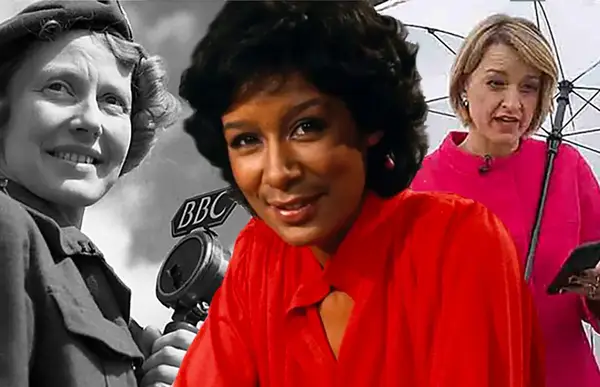
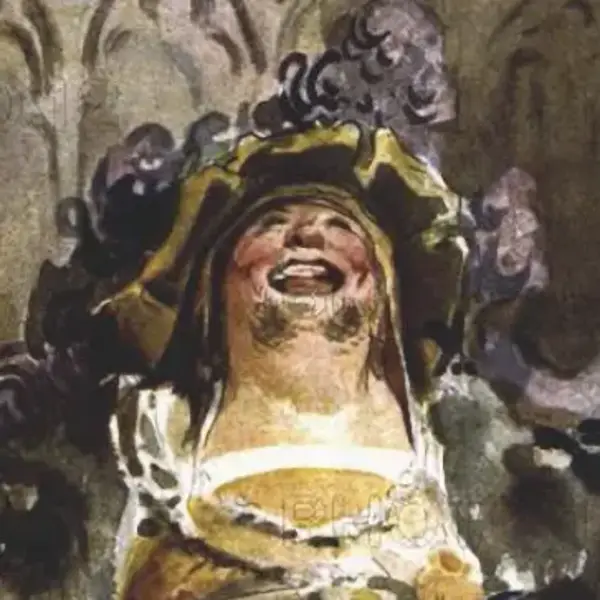
Put on a Red Nose and Fundraise

Red Nose Day is back on Friday 18 March in the UK.  British charity Comic Relief has been encouraging people to don a clown's red nose and "do something funny for money" since 1988. This year, the event returns to its annual slot and Sport Relief will be back later in the year in conjunction with the Commonwealth Games in Birmingham (28 July-8 August).

Voir l'article
Logo de la revue d'appartenance NRP

Jouez avec Molière !

La NRP de mars sur « L'illustre Molière »   est paru. À  cette occasion, voici une grille de mots croisés conçue par nos auteurs, pour vous et pour vos élèves.  

Voir l'article
Logo de la revue d'appartenance NRP

Vitali Konstantinov, La grande histoire de l’écriture, de l’écriture cunéiforme aux émojis

Par Camille Lacour Les métamorphoses de l’écriture Des symboles cunéiformes, créés dans un système de logogrammes, jusqu’aux irremplaçables émojis de nos smartphones, l’écriture a connu d’innombrables formes et évolutions au cours du temps. Avec beaucoup d’humour, La Grande Histoire de l’écriture , album jeunesse écrit et illustré par Vitali Konstantinov, présente les traits que les caractères, l’alphabet et les encodages ont revêtus depuis la Préhistoire. L’album se découpe en trois parties. La première reprend les bases de l’écriture, dévoilant l’alphabet phonétique international (API), cette description des sons présents dans toutes les langues. La seconde partie dévoile toutes les écritures que les peuples ont su élaborer, en commençant par l’écriture cunéiforme, née à Sumer (l’actuel Irak), qui se répandit parmi les peuples voisins tout en s’adaptant à des dialectes différents. Enfin, la dernière partie s’intéresse aux alphabets proches du nôtre, mais aussi aux univers de Tolkien et de Star Trek , mondes dans lesquels sont imaginées des nouvelles langues pleines de surprises. À travers cet album, Vital Konstantinov offre un réel plaisir aux amoureux des Lettres. Tantôt drôle, tantôt instructif, il retrace de façon chronologique l’histoire de l’écriture selon les époques, les lieux et les cultures. Les illustrations donnent une certaine dynamique au texte, lui apportant ce côté ludique et attrayant qui aideront les plus jeunes à retenir les informations plus facilement. Il pourra, peut-être aussi, nous redonner goût au glissement de la pointe du stylo-plume à la surface du papier blanc… Vitali Konstantinov, La grande histoire de l’écriture, de l’écriture cunéiforme aux émojis , Éditions La joie de lire, 80 pages, 24,90 €  

Voir l'article
Logo de la revue d'appartenance Speakeasy

Discovering musicals with 4e euro

Cultural projects based around a trip or an exchange with an English-speaking country have been curtailed by the pandemic. But necessity is the mother of invention, so two teachers in Toulouse decided to open their students’ horizons through studying musical films (Singin’ in the Rain, West Side Story and La La Land) thanks to their local cinemathèque.

Voir l'article

1

Ressources
complémentaires

La démocratie « continue »

Dominique Rousseau, présente son concept de démocratie « continue » pour dynamiser la démocratie française.

Voir l'article
Logo de la revue d'appartenance Speakeasy

In the Streets of Belfast

Belfast is actor-director Kenneth Branagh‘s most personal film yet. It’s the story of nine-year-old Buddy growing up in Belfast in a friendly, working-class community until the Troubles brutally disrupt his life in 1969. Belfast is set in 1969, when what were called “the Troubles” went from protests to violent riots in the space of a weekend. Opposition to British colonial rule of Ireland had led to Irish independence in 1921. But the population of the six north-eastern counties chose to remain part of the U.K., as Northern Ireland. The majority of the population was Protestant and often Unionist, supporting remaining in the U.K. A significant minority was Catholic and often Republican, supporting the unification of all of Ireland. The Catholic population was generally poorer and excluded from the best-paying jobs, best places to live, and limited in their access to the political system. From 1967 there had been a growing civil-rights movement demanding equal rights. But in August 1969, demonstrations in Derry Londonderry and Belfast degenerated into violence. The demonstrators blamed heavy-handed policing from the almost exclusively Protestant Royal Ulster Constabulary . The British government reaction was to deploy the British Army on Northern Irish streets. They remained until 2007. To Stay or Not to Stay Buddy’s family in the film, and Kenneth Branagh’s in real life, were faced with a decision to make. Stay in what was effectively a war zone, or leave for mainland U.K. or somewhere else in the British Commonwealth. They would leave everything they knew, and their close-knit family. But they would gain safety and potentially a better future for the children. The father in the fictional and real family was already working in England, because he couldn’t get a well-paid job in Belfast. Did it make sense to stay when the economic situation was unlikely to improve and violence and hatred was making everyday life fraught with danger? [video width="640" height="480" mp4="http://www.speakeasy-news.com/wp-content/uploads/2022/03/SN_belfast_clip.mp4"][/video] Branagh plunges the audience into this dilemma. Buddy is very attached to his grandparents, and the girl at school he doesn’t dare talk to but intends to marry. He is worried that no one will understand his accent if he has to go to England. But he also can’t understand how neighbours have suddenly become enemies and familiar streets are blocked with barricades. The film has been nominated for seven Oscars including best picture, director and screenplay and best supporting actors for Dame Judi Dench and Ciarán Hinds.   Branagh from Belfast Many cinema fans are unaware that Branagh is Northern Irish. The actor is famous for his Shakespearean roles and most recently directing himself as Hercule Poirot in two successful Agatha Christie adaptations. There’s no trace of Belfast in his drama-school-trained Received Pronunciation. He says that this is because when his family moved to England in the 1970s, their accent marked them out for suspicion. IRA attacks were frequent on the mainland and all Northern Irish people were viewed as potential terrorists. The young Branagh lost no time changing his accent to fit in with his new surroundings. But he never lost his love for his home city and during the Covid lockdown found himself thinking back nostalgically to the days when he played in the streets, often acting out the stories he loved to see in the cinema. Although his father was away working in England, there was plenty of affection from his mother and grandparents. He describes the feeling of belonging he had as a child, saying, "We were related to one half of Belfast and we went to school with the other half.”   Coming next week: a B1+-B2 ready-to-use resource on Belfast . Belfast on general release 2 March

Voir l'article

1

Ressources
complémentaires

La politique agricole commune : à quoi ça sert ?

Depuis 1962, la Politique agricole commune est un outil fondamental du développement de l’agriculture européenne.

Voir l'article
Logo de la revue d'appartenance Speakeasy

Random Acts of Welshness for St David's Day

St David's Day, 1 March, is Wales's national day, in honour of its patron saint. This year, the Welsh government is encouraging people to share "random acts of Welshness" on social media. So what are some distinctively Welsh things to do on 1 March?

Voir l'article
Logo de la revue d'appartenance Speakeasy

Rendez-vous

What is the State of the Union Address?

President Biden will give his first State of the Union Address on 1 March.

Voir l'article

1

Ressources
complémentaires

Information et médias dans la guerre d’Ukraine

Anna Colin Lebedev explique comment la manipulation de l’information est devenue une arme dans la guerre d’Ukraine.

Voir l'article

3

Ressources
complémentaires

Logo de la revue d'appartenance NRP

Article de presse

Molière, George Dandin

George Dandin, un riche paysan désireux d'intégrer la société aristocratique, épouse Angélique de Sotenville, une jeune fille noble mais assez peu docile. Comédie sociale et assez noire, cette courte pièce qui traite d'un mari bafoué évoque également la condition des femmes.

Voir l'article

4

Ressources
complémentaires

Logo de la revue d'appartenance NRP

Séquence pédagogique

Molière, Le Malade imaginaire

Le Malade imaginaire est une œuvre bilan, où Molière concentre ses thèmes favoris - la maladie et les médecins, le mariage, l'argent, la folie, le pouvoir des pères - au sein d'une comédie-ballet désopilante. La pièce est traitée dans le cadre du parcours « Spectacle et comédie ».

Voir l'article

2

Ressources
complémentaires

Logo de la revue d'appartenance NRP

Corrigés

L'interrogation

Dans l'optique de l'oral du Bac, cette fiche propose une série d'exercices sur le thème de l'interrogation à partir d'exemples extraits du Malade imaginaire de Molière.

Voir l'article

3

Ressources
complémentaires

Logo de la revue d'appartenance NRP

Fiche élève

La seconde mort d'Eurydice

Quand Orphée se retourne pour voir Eurydice, elle meurt une seconde fois. Les vers des Georgiques trouvent un écho dans un extrait du roman de Claudio Magris Vous comprendrez donc, et un tableau de Stanhope.

Voir l'article

1

Ressources
complémentaires

Le Havre, un port de la Northern Range européenne

Une analyse des espaces de la ville et du port du Havre à partir d’une image satellitale.

Vous avez vu 1200 résultats sur 2532