








Voir l'article
Logo de la revue d'appartenance Speakeasy

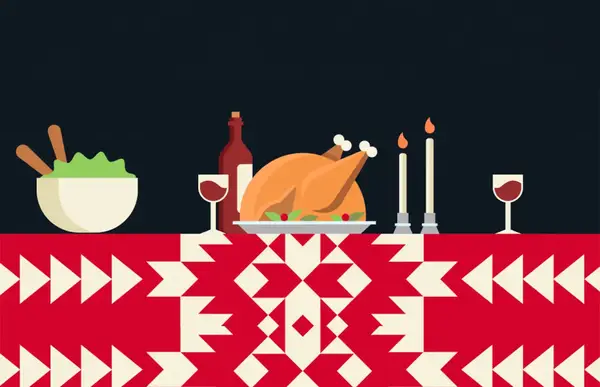
Trick or Treat to Do Good

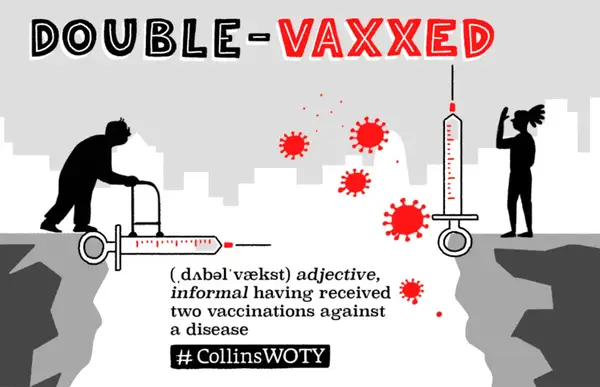
Halloween is an important fundraiser for UNICEF U.S.A. Trick or Treat for UNICEF was started in 1947 and 31 October was declared UNICEF Day by President Lyndon B. Johnson 20 years later. It allows kids "put some meaning in their Halloweening" by collecting money for the United Nations Childrens' Fund. 

Voir l'article
Logo de la revue d'appartenance Speakeasy

Sélection culturelle

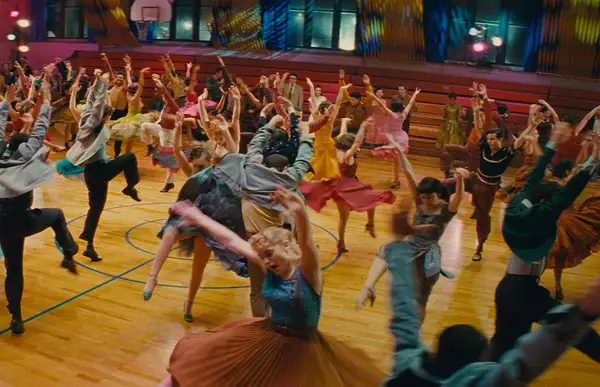
Love Letter to France

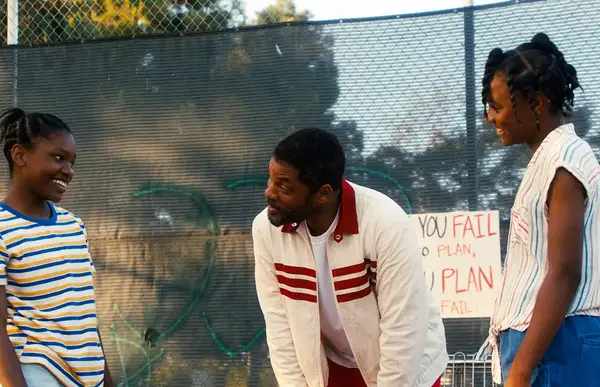
Wes Anderson’s latest film "The French Dispatch" is a homage both to his adopted country and to the amazing writers nurtured by "The New Yorker" magazine, of which Anderson is an avid reader. As with his earlier films like "The Grand Budapest Hotel" and "Moonrise Kingdom", he has assembled an amazing cast.

Voir l'article
Logo de la revue d'appartenance Speakeasy

Irish Legends: Wolfwalkers

Tomm Moore’s animated films are rooted in Irish folklore and history. After fairies in Brendan and the Book of Kells and selkies in Song of the Sea , the heroes of his latest film are wolfwalkers, which he describes as “benign Celtic werewolves”. The film is set in 1650, when Cromwell’s English army had put down an Irish rebellion and the colonisers were imposing urbanisation and destroying forests Robyn is English. She and her father have come to Ireland with the Cromwellian figure of the Lord Protector. Her father is an experienced wolf hunter and Robyn usually hunts with him but here, in a colonised Irish town under siege, she is as much in danger from the locals as wolves and is forced to remain in the village while her father goes hunting in the woods which are being cut down on English orders to “civilise” the area and prepare it for organised agriculture. Robyn hates being stuck at home doing domestic tasks and defies the ban on going into the woods. There she meets Mebh, who is a wolfwalker. When she is awake she’s a girl but when she sleeps she becomes a magical wolf who the real wolves obey. Mebh accidentally bites Robyn, who becomes a wolfwalker too, torn between her father the hunter and the wolves her friends. She swears to help Mebh find her missing mother but soon faces difficult choices. https://youtu.be/d_Z_tybgPgg All three films in the trilogy, which are traditional hand-drawn animations, have been nominated for best feature animation at the Oscars. They draw on Irish motifs and designs from pre-Christian times.   This  would make an interesting complement to the escape game in Shine Bright 2e SnapFile 18 Celtic Legends , or could widen out the escape game on Scottish legends in our escape-game pack.  

Voir l'article
Logo de la revue d'appartenance Speakeasy

Barbados Elects its First President

On 21 October, the Caribbean nation of Barbados took the first step towards becoming a republic when the joint houses of Parliament chose Dame Sandra Mason as the country’s first president, to replace Queen Elizabeth II as head of state. Ms Mason, a trained lawyer and former magistrate, has been the Governor-General of Barbados since 2018: the representative of the British Crown on the island. Barbados will officially become a Republic on 30 November, its annual Independence Day, joining three other former British colonies in the Caribbean which have replaced the British monarch with an elected official: Guyana, Trinidad and Tobago, and Dominica. All three remained members of the Commonwealth, which Barbados also intends to do. A committee is currently working on a new citizens'  charter for the new President to read out on Independence Day, and next year Parliament will make proposals for new Constitution. When the decision to move toward Republic status was approved in 2020, Governor General Mason, delivering a speech on behalf of the country’s Prime Minister Mia Mottley, said, “The time has come to fully leave our colonial past behind.” Barbados was a British colony from 1627 century until independence in 1966. Colonists resorted to slave labour to produce sugar, with the result that today the population is in large majority descended from enslaved African people. Today it has a population of 285,000 and an economy based around tourism, finance and sugar production. This would be a good update for Shine Bright 1e File 7 Caribbean Vibes or    Shine Bright LLCER File 8 From Isle to Isle.

Voir l'article
Logo de la revue d'appartenance Speakeasy

Rendez-vous

Jack Kirby: the Man who Created the Eternals

The Eternals movie is based on the Eternals comic and characters created by Jack Kirby, which was first released in 1976.

Voir l'article
Logo de la revue d'appartenance Speakeasy

The Earthshot Prizes: Working with Videos

The Earthshot Prizes website has great short videos on the five ecological challenges the prizes aim to tackle. They are perfect for class use, either picking a theme or having groups work on different videos and share information.

Voir l'article
Logo de la revue d'appartenance Speakeasy

Short Films with your Collège Students

The This is England short-film festival in Rouen has a specific programme of short films for collège classes covering topics from food poverty to sharing, coming-of-age to fossil hunting.

Voir l'article
Logo de la revue d'appartenance Speakeasy

Halloween with Unicef Videos

Halloween is a popular celebration with pupils, and it can be a great way to introduce some English-speaking culture. In the U.S.A., a major Halloween tradition is Trick or Treat for Unicef, a  fundraising campaign for the United Nations children's fund. Unicef has lots of teaching resources about the campaign.

Voir l'article
Logo de la revue d'appartenance Speakeasy

Sir Walter Scott at 250

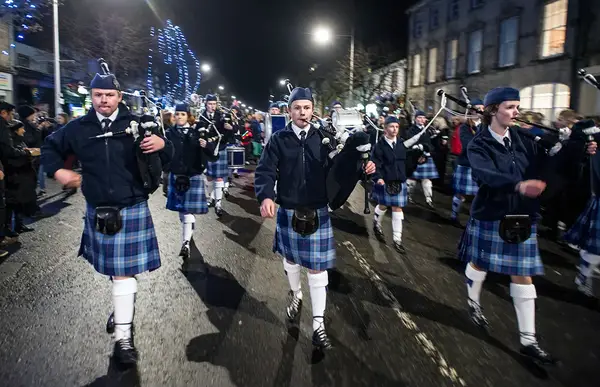
The father of the historical novel, author of Ivanhoe and the romanticised image of Scottish history portrayed in the Waverley novels, and a collector and preserver of ballads from the oral tradition, Sir Walter Scott was one major figures of Victorian Britain. This year, Scotland celebrates the 250 th anniversary of his birth. Scott was born the son of a lawyer in Edinburgh on 15 August, 1771. At the age of two, he contracted polio, which left him with a limp for the rest of his life. He was sent to stay with is grandparents in the Scottish borders, because the country air was considered better for his health. He was to stay there on and off until he was seven, and was greatly influenced by the ballads and folk tales his grandmother and Aunt Jenny told him. Many featured his ancestors, who, like many people who lived on the border were “reivers”: outlaws who regularly went on raids into England. This light and sound show to commemorate Scott’s 250 th anniversary was projected onto Smailholm Tower in the borders, where his ancestors had lived. https://youtu.be/uC5XsDTLZNI Scott trained as a lawyer, and did work as one, but he had fallen in love with German Romantic poetry and published several translations. He also published anthologies of Scottish ballads he had collected, Minstrelsy of the Scottish Borders. Then he started writing his own epic poems. The most famous, The Lady of the Lake (1810), was set to music by Schubert. It is a tale from Scottish history, a struggle between King James V and the powerful Douglas clan. It was to set the tone for many of Scott’s novels. His first, Waverley (1814), was an immediate and international success. Set in the Scottish Highlands, it combined romantic descriptions of the wild landscape and of the heroic clans. He would go on to write over two dozen of the Waverley novels and is credited with inventing the genre of the historical novel. Most of them are set in Scotland, like the hugely popular Rob Roy , although Ivanhoe , a medieval English tale of chivalry is another of the bestsellers. Both have been adapted as films. https://youtu.be/p76fH8_a32Y The Waverley novels were published anonymously, as Scott wanted to keep his name for his serious poetry, and his legal work. His authorship was only officially revealed in 1827, five years before his death. The world Scott often described, of the Highland clans living in harmony with admittedly harsh nature and according to strong codes of honour, had disappeared by the time he was writing. The clan system had been dismantled by the British crown after the 1745 Jacobite Rebellions. Wearing tartan and carrying weapons were outlawed. Scott contributed to reviving the fashion for tartan in 1822. Always torn between his love for the Scottish past and enthusiasm for the mercantile British future, he helped organise George IV’s visit to Scotland. He adorned Edinburgh in tartan and kilts and launched a craze that would lead to George’s niece, Queen Victoria’s love of Scotland. (She was an enthusiastic reader of Scott.) Scott, who had been made a baronet in 1818, died in 1832, but left his mark on Scotland and on literature. He contributed more words and phrases to the English language than any writer other than Shakespeare. After his death, his home city Edinburgh erected a large monument to him, which still stands on the city’s main thoroughfare, Princes Street. It is a stone’s throw from the main train station, named Waverley after his novels. https://youtu.be/Po_KnisANPY Head over to Ready-to-Use resources for a Biobox video to introduce your students to Scott from A2+.    

Voir l'article

5

Ressources
complémentaires

Logo de la revue d'appartenance Speakeasy

Guy Fawkes

This A1+ article is a short introduction to the Gunpowder Plot, and the traditions of Guy Fawkes Night, 5 November. As 5ème pupils are studying the XVIIe century in history, it lends itself well to an EPI.

Voir l'article
Logo de la revue d'appartenance Speakeasy

David Attenborough: People's Advocate for the Planet

Sir David Attenborough has fascinated viewers around the world for decades with his documentary series like The Blue Planet and Life on Earth. Now the 95-year-old naturalist is using his communication skills to try to explain the complex issues to be tackled the United Nations’ COP26 environmental summit in Glasgow from 31 October. Attenborough was named “People’s Advocate” by the British government, which is hosting the summit , which was postponed from last year. In that role he has been making a series of speeches in the run up to the summit, and will speak at the event itself. Attenborough’s statement on the nomination: https://youtu.be/Oevm9nQz25k Attenborough revolutionised natural history programming at the BBC in 1954, when he produced and co-presented Zoo Quest, the first series produced by the BBC where animals were filmed in the wild. After a stint as a BBC executive (we have him to thank for Monty Python’s Flying Circus being broadcast), Attenborough returned to his first love: nature programmes. The zoology graduate has roamed the globe several times over and worked with incredible camera operators to bring us images of life in all its variety ever since. At 95, he now does more narrating than exploring and in recent years has become more and more worried about climate change affecting biodiversity and the natural environments he loves. His three most recent series, Our Planet (2019), Climate Change—The Facts (2019), and David Attenborough: A Life on Our Planet (2020) were all cries of distress on behalf of the natural world. He wishes to impress upon the leaders at COP26 and the general public the need for urgency. However, he does see hope as long as we act now. In a recent speech at the Chatham House think tank in London, his warning was stark, “The world is being destroyed. We are doing it.” But he saw a positive change in attitude. “In the past, international relationships have been dominated by argument, by people with one point of view disagreeing with people with another point of view. But now there is a difference. Now the major problems that face the nations of the world are the same for all nations.” This, he hopes, will make them work together to find solutions for future generations.  “The most powerful dynamic that should force those people in Glasgow is that it is young people who see this it is their future. They now understand what the problems are worldwide.” Attenborough is a fellow of the Royal Society, Britain’s oldest and most prestigious science institution. He has been working with them on their consciousness-raising campaigns on climate change . He recently narrated this short animation that succinctly explains the importance of biodiversity for our future, and the dangers it faces. https://youtu.be/GlWNuzrqe7U As he concludes,"We need all the riches of our living planet to help us live healthy, happy lives long into the future." COP26 United Nations Climate Change Conference 31 October-12 November

Voir l'article
Logo de la revue d'appartenance Speakeasy

In Conversation with Kenneth Branagh

If you are studying "Much Ado About Nothing" with your LLCER students, or anything about the Troubles in Northern Ireland, you’ll want to download this long-form interview with actor-director Kenneth Branagh from BBC Radio 4.

Voir l'article
Logo de la revue d'appartenance Speakeasy

What Resources Would You Like?

Are there subjects you would like to see us covering in our Ready to Use Resources? (Or indeed in our Webpicks or articles?) We'd love to hear your ideas! Why not drop us a line with an idea or two. You could also mention the level you're interested in teaching it at. We'll do our best to cover as many topics as possible. You can e-mail us by clicking on this link .

Voir l'article
Logo de la revue d'appartenance Speakeasy

Your Students Have Talent: Masked Self Portraits

We always love to see your students' work. Adeline Paget sent us photos of her 6e students who did the masked self-portraits activity we suggested.

Voir l'article
Logo de la revue d'appartenance Speakeasy

Your Students Have Talent: Standard English

And in our series Your Students Have Talent, here is just a small sample of an amazing discussion by students studying Shine Bright AMC SnapFile 12 Standard English, about the status of English alongside other languages in the world today.

Voir l'article

1

Ressources
complémentaires

Les États-Unis dominent la course aux Nobel

Cet article permet de comprendre le leadership des États-Unis dans l’obtention des prix Nobel.

Voir l'article

2

Ressources
complémentaires

Logo de la revue d'appartenance NRP

Séquence pédagogique

Plongée dans un parcours littéraire et pictural

Voir l'article

2

Ressources
complémentaires

Logo de la revue d'appartenance NRP

Séquence pédagogique

Le retour de l'explication linéaire

Pour apprendre à mener à bien une explication linéaire, l'article prend le parti de travailler l'exercice objet d'étude par objet d'étude, en illustrant le propos par des exemples choisis.

Voir l'article

3

Ressources
complémentaires

Logo de la revue d'appartenance NRP

Séquence pédagogique

La contraction de texte

La contraction de texte est un exercice essentiel, au-delà de la préparation au Bac, puisqu'il figure aux épreuves de nombreux concours. Apprendre à résumer impose de respecter des étapes que cet article détaille.

Voir l'article

2

Ressources
complémentaires

Logo de la revue d'appartenance NRP

Séquence pédagogique

Grand oral : le préparer et s'exercer

Pour dédramatiser le grand oral, l'article propose une méthodologie et des activités qui peuvent être mises en œuvre quelles que soient les matières choisies. Cela implique une solide préparation en amont et des exercices spécifiques pour préparer la prestation orale.

Vous avez vu 1380 résultats sur 2524