




Voir l'article
Logo de la revue d'appartenance Speakeasy

Sélection culturelle

A Canine Sergeant

Stubby, a stray dog, became the mascot of an American regiment in World War I and accompanied the soldiers so steadfastly that he was given the rank of Sergeant. A new animated feature brings this true story to life.

Voir l'article
Logo de la revue d'appartenance Speakeasy

Rendez-vous

Australian Election Turnaround

Australia’s Liberal National Coalition has scored a surprise victory in the federal election called by Liberal Party Prime Minister Scott Morrison.

Voir l'article
Logo de la revue d'appartenance Speakeasy

Sélection culturelle

Talk in English: World War I Poets

Why did the First World War inspire so many combatants to write poetry? And what effect does the work of poets like Wilfred Owen, Siegfried Sassoon or Rupert Brooke have on our vision of that war today? Author Simon Davies will address these questions in a public talk at the British Council Paris on 6 June.

Voir l'article
Logo de la revue d'appartenance Speakeasy

Rendez-vous

The Election that wasn’t Supposed to Happen

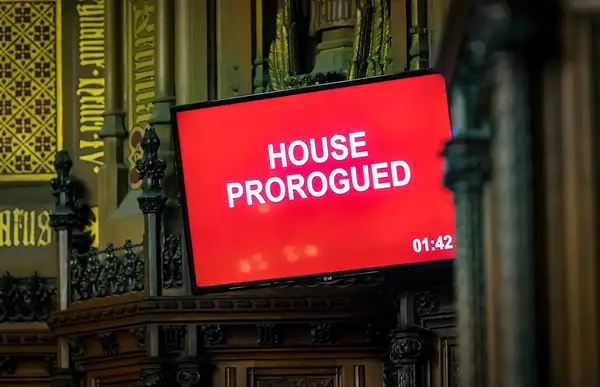
Voting in the European Parliamentary elections started on 23 May in the Netherlands and the UK — where the elections weren’t supposed to take place at all. One more chapter in the chaos of Brexit.

Voir l'article
Logo de la revue d'appartenance Speakeasy

Rendez-vous

Voting in the World’s Biggest Democracy

After six weeks of voting, the results were as rapid as they were clear: Prime Minister Narendra Modi’s Hindu Nationalist party, BJP, returned to power with a landslide victory in India's elections

Voir l'article

5

Ressources
complémentaires

Logo de la revue d'appartenance Speakeasy

Indigenous Rap: Young Australian of the Year

This year’s Young Australian of the Year is Danzal Baker, alias Baker Boy, a 22-year-old Indigenous Australian who raps in three languages. As well as achieving success in rap, dance and graffiti, Baker mentors Indigenous youth to help them achieve their dreams.

Voir l'article
Logo de la revue d'appartenance Speakeasy

Sélection culturelle

Zombies, Loach, Tarantino and Elton John at Cannes

The subjects covered by the films in the main competition at this year’s Cannes Festival are very varied. The English-language competitors are a case in point, ranging from zombies in small town America to washed-up actors in Hollywood, to an indictment of the gig economy in the UK.

Voir l'article
Logo de la revue d'appartenance Speakeasy

Eating Your Greens

National Vegetarian Week is taking place from 13 to 19 May in the UK, encouraging people to move towards a plant-based diet for their health and the planet’s.

Voir l'article
Logo de la revue d'appartenance Speakeasy

Going Vegetarian Videos

For National Vegetarian Week, Britain’s Vegetarian Society has created three short videos about going vegetarian, or at least trying to eat less meat and fish. The three 1-minute videos would make a great class group activity, with each group watching a video about eating less meat to help the environment, improve their health, or to support animal rights.

Voir l'article
Logo de la revue d'appartenance NRP

Dire les petites et les grandes violences - Entretien avec Jerôme Ferrari

Propos recueillis par Claire Belin-Bourgeois et Françoise Rio Si l’œuvre romanesque de Jérôme Ferrari a évolué depuis Le Sermon sur la chute de Rome , couronné par le prix Goncourt en 2012, on retrouve dans ses onze romans publiés chez Actes Sud un même ancrage en Corse, une écriture ardente, une douloureuse interrogation sur les violences de l’Histoire récente. Jérôme Ferrari vit en Corse et enseigne la philosophie en classe de terminale dans un lycée d’Ajaccio et en hypokhâgne à Bastia. Votre dernier roman, À son image , met en scène un prêtre qui célèbre l’office funèbre de sa filleule, jeune photographe morte dans un accident de voiture. Comment sont nés ces personnages fictifs ? Tous deux étaient présents dès l’origine du roman, centré sur la question de l’image. Je voulais traiter de la fonction de représentation des images, notamment de la photographie de presse, mais aussi du rôle de l’image dans le développement du catholicisme. Par ailleurs, la question de la théodicée m’intéresse. Néanmoins, je ne peux travailler l’écriture d’un roman à partir de données abstraites, j’ai besoin d’éléments concrets. Ainsi, pour moi qui ne suis pas croyant, il était intéressant de chercher à voir, de l’intérieur, comment un prêtre pouvait aborder ces questions ou leur apporter une solution. Peut-être étais-je aussi sous l’influence, plus ou moins consciente, des romans de Georges Bernanos. Quant au personnage de la jeune femme, il est lié au travail sur le photo-reportage que j’avais fait antérieurement. Je savais d’emblée qu’il y aurait un lien de parenté entre le prêtre et la jeune femme et que la mort de celle-ci serait connue dès le début du roman. Quelle importance a eu, dans la genèse du roman, sa composition en forme de messe funèbre ? Je ne peux commencer à écrire qu’à partir du moment où j’ai trouvé l’agencement général du roman. Pour celui-ci, ce sont les textes rituels, les moments liturgiques, qui résonnent sur l’ensemble des chapitres. Ce qui m’intéresse, c’est la fécondité que l’aspect formel peut avoir sur le fond d’un roman. Il ne s’agit pas, pour moi, d’écrire des textes que je mettrais en forme après. La composition est toujours première. Plusieurs formes de violence se manifestent dans vos romans. S’agit-il de créer des échos entre la violence spécifique à la Corse et d’autres violences, plus lointaines, telles que celles de la guerre en ex-Yougoslavie qui est évoquée dans À son image ? Il faut être précautionneux si l’on parle d’ « échos », car il ne s’agit pas de comparaison entre ces formes de violence, sinon cela génère des contresens de lecture. Ainsi, lors de la parution d’ À son image , certains journalistes m’ont dit que je présentais les nationalistes corses comme des abrutis, ce qui n’est pas du tout mon propos. Je voulais simplement montrer les choses de l’intérieur. Ce qui m’intéresse dans le personnage de la photographe, c’est son aveuglement par rapport à la violence qui l’environne. Le prêtre dit que cette jeune femme ne comprend pas que le péché ne se quantifie pas : je partage assez l’idée que le péché peut se trouver aussi bien dans les petites que dans les grandes choses, et que l’on peut rapprocher les petites et les grandes violences. Comment travaillez-vous l’écriture dans vos différents romans ? Ma manière d’écrire a beaucoup changé depuis mes deux premiers romans. Quand j’ai commencé, j’écrivais vraiment à la ligne, j’écrivais beaucoup et ensuite je reprenais. Plus le temps passe, plus j’écris avec une atroce lenteur, mais j’ai beaucoup moins de choses à modifier par la suite. La lenteur de l’écriture limite mes capacités de transformation, ou alors il faudrait que je casse absolument tout. Toutefois, cela dépend des textes. La première chose qui m’est venue pour écrire Où j’ai laissé mon âme , c’est le ton du personnage qui parle, et qui a entraîné à peu près tout le reste. Il y a certes du travail, mais, avant d’écrire, il faut une mise en condition psychologique ou musicale. Je ne sais pas retravailler un texte après-coup pour lui donner le ton que je voudrais : il faut que je sois dans le ton d’abord. Après, je peux revenir sur les détails du texte, que je relis à voix haute pour en corriger uniquement les éléments rythmiques et euphoniques, ou parfois changer un mot qui ne convient pas. Après quelques romans, j’ai eu l’impression que, devenu trop à l’aise dans un certain style, je courais le risque de l’auto-parodie, comble du ridicule et du tragique. Il y a une forme d’automatisme dans laquelle on risque toujours de se laisser prendre, malgré soi. C’est pourquoi, dans Où j’ai laissé mon âme , notamment, j’ai voulu changer de manière d’écrire sans avoir pour autant l’intention d’entreprendre une révolution stylistique à la Romain Gary. J’avais seulement besoin de passer à quelque chose qui me soit un peu moins familier. J’ai aussi opéré ce genre de changement en écrivant Dans le secret , ou Un dieu, un animal , mon cinquième roman. On évoque souvent le « pessimisme » ou la « vision sombre » qui émaneraient de vos romans. Cautionnez-vous ces qualifications ? Je ne me sens pas particulièrement pessimiste. L’optimisme et le pessimisme ne sont pas des catégories qui me conviennent car je ne les trouve guère pertinentes. Je souscris volontiers à la phrase de Bernanos dans les Grands cimetières sous la lune qui voit en l’optimisme une forme de sécheresse du cœur : « L’optimisme m’est toujours apparu comme l’alibi sournois des égoïstes, soucieux de dissimuler leur chronique satisfaction d’eux-mêmes. Ils sont optimistes pour se dispenser d’avoir pitié des hommes, de leur malheur ». Aujourd’hui, l’ambiance sociale tend à valoriser l’optimisme, par exemple lors de ces séminaires d’entreprises où l’on vous explique comment surmonter ses échecs pour se renforcer soi-même. Il y a derrière cela une idéologie qui me paraît immonde, consistant à dire que chacun est responsable de ses échecs, que, si on ne va pas bien, ce serait faute d’avoir bien pris les choses … etc. Or, le monde est comme il est, cela relève du fait et non d’une orientation d’humeur. Et quand on me dit parfois que, dans mes romans, je devrais voir le bon côté des choses, cela m’énerve presque autant que les entendre qualifiés de « romans philosophiques » : réflexions triviales ou absurdes. Pourquoi tous vos romans sont-ils situés en Corse ? C’est l’endroit du monde que je connais le mieux et sur lequel je suis le moins susceptible d’écrire des bêtises. Je trouve que c’est un lieu particulièrement intéressant du point de vue littéraire, pour de multiples raisons, tenant à l’histoire, à la culture, à l’omniprésence de la violence qui marque la géographie. La Corse est en outre, comme un condensé de modernité, un pays qui ne vit que du tourisme de masse, ce qui retentit beaucoup sur la vie de ses habitants : l’alternance brutale du désert et de la frénésie ne laisse pas les gens indemnes. Je suis par ailleurs très sensible à la fantasmagorie de la construction identitaire. Je suis originaire de Fozzano, le village qui a servi de « modèle » à Mérimée pour l’écriture de Colomba , et je trouve intéressant de se réapproprier ces processus qui conduisent à des clichés. Ce qui m’intéressait, auparavant, c’était d’écrire un roman qui se passe en Corse mais qui ne soit pas lu comme un roman régional. C’était un grand problème il y a une quinzaine d’années, quand la question du regard sur la Corse était très déterminée par des représentations figées. Ainsi, je reste persuadé qu’en 2002 Le Sermon sur la chute de Rome (publié en 2012) n’aurait pu avoir le Goncourt. J’en suis sûr, parce que la première fois qu’à la télévision on a parlé d’un de mes romans, c’était sur fond de polyphonies et d’images de plages, qui n’avaient pourtant rien à voir avec le récit en question. En dehors de cet ancrage géographique, avez-vous un sentiment d’appartenance à une communauté ? J’appartiens à plein de choses. Cela ne me dérange pas de penser que mes livres appartiennent à la littérature corse autant qu’à la littérature française. J’ai par ailleurs des liens intellectuels étroits avec Marcu Biancarelli dont j’ai traduit en français les livres écrits en corse, ou avec Thierry de Peretti, le réalisateur d’ Une vie violente . On a tous à peu près le même âge, ce qui n’est pas un hasard, on a commencé en même temps, on a vécu les mêmes choses, et on y a réagi de manière esthétique de façon assez similaire, sans doute. Mais je ne vois pas ce qui pourrait faire de nous un groupe, et je nous imagine mal écrire un manifeste.

Voir l'article
Logo de la revue d'appartenance Speakeasy

Sélection culturelle

To Kill a Mockingbird: Adapting to Film

Adapting a scene from a book as a film scene, or a film scene as prose, is an excellent English-learning exercise. To see how the experts do it, a talk at the American Library in Paris analyses the adaptation of one of America’s classic books into one of its classic films. Judith Merians, Hollywood executive and film professor, will analyse the film adaptation of To Kill a Mockingbird , the classic coming-of-age story and examination of race relations in the U.S.A. As well as an overview, she will juxtapose specific scenes from the book with their film versions. Harper Lee won the 1961 Pulitzer Prize for fiction with her story set in 1930s, Depression era Alabama. It is told from the point of view of a little girl, Scout Finch, who observes the drama play out when her lawyer father Atticus defends Tom Robinson, a black man, who is accused of raping a white woman. The novel was adapted as a film the following year, directed by Robert Mulligan and starring Gregory Peck as Atticus. The film won four Oscars, including best actor and best screenplay. Lee was born in 1926 in Monroeville, Alabama. She retired from public life in 1964. To Kill a Mockingbird was her only published novel until the publication of a follow-up, Go Set a Watchman , in 2015, less than a year before her death. This book was actually written before Mockingbird, a sort of first draft of the classic novel, but the Scout narrator is an adult. To Kill a Mockingbird is widely taught in U.S. schools and universities. It was voted America’s favourite novel in a 2018 competition organised by PBS. A theatre adaptation is currently on Broadway. The photo above shows stars Jeff Daniels and Gbenga Akinnagbe as Atticus Finch and Tom Robinson.   A Night at the Movies with Judith Merians: To Kill A Mockingbird Wednesday 22 May at 7.30 p.m. American Library in Paris Free

Voir l'article
Logo de la revue d'appartenance Speakeasy

Rendez-vous

It's a Boy!

Britain is celebrating a new royal baby, as Prince Harry and Meghan Markle announced the birth of their son on 6 May 2019. The British capital decided to have babies welcome the baby.

Voir l'article
Logo de la revue d'appartenance Speakeasy

La semaine des langues 2019

The fourth edition of the Semaine des Langues is taking place from 13 to 18 May. This year’s theme, like last year’s, is “Let’s Share Languages”.

Voir l'article
Logo de la revue d'appartenance Speakeasy

Who Am I? Competition Winners

Here are the winning quizzes in our A2-level writing competition to write a 10-question “Who Am I?” quiz about a famous English-speaker. As promised, we’ve transformed their questions into “Biobox” videos. Can you guess who they are?

Voir l'article

1

Ressources
complémentaires

Logo de la revue d'appartenance Speakeasy

Biobox: Queen Elizabeth II

Our bioboxes are short "Who Am I?" quizzes to help introduce pupils to famous figures in the English-speaking world. This one was written by pupils for our "Who Am I?" contest.

Voir l'article

1

Ressources
complémentaires

Logo de la revue d'appartenance Speakeasy

Biobox: Sherlock Holmes

Our bioboxes are short "Who Am I?" quizzes to help introduce pupils to famous figures in the English-speaking world. This one was written by pupils for our "Who Am I?" contest.

Voir l'article

1

Ressources
complémentaires

Logo de la revue d'appartenance Speakeasy

Biobox: Beyoncé

Our bioboxes are short "Who Am I?" quizzes to help introduce pupils to famous figures in the English-speaking world. This one was written by a pupil for our "Who Am I?" contest.

Voir l'article

1

Ressources
complémentaires

Logo de la revue d'appartenance Speakeasy

Biobox: Charles Darwin

Our bioboxes are short "Who Am I?" quizzes to help introduce pupils to famous figures in the English-speaking world. This one was written by pupils for our "Who Am I?" contest.

Voir l'article

1

Ressources
complémentaires

Logo de la revue d'appartenance Speakeasy

Biobox: Emma Watson

Our bioboxes are short "Who Am I?" quizzes to help introduce pupils to famous figures in the English-speaking world. This one was written by a pupil for our "Who Am I?" contest.

Voir l'article
Logo de la revue d'appartenance Speakeasy

ANZAC Day

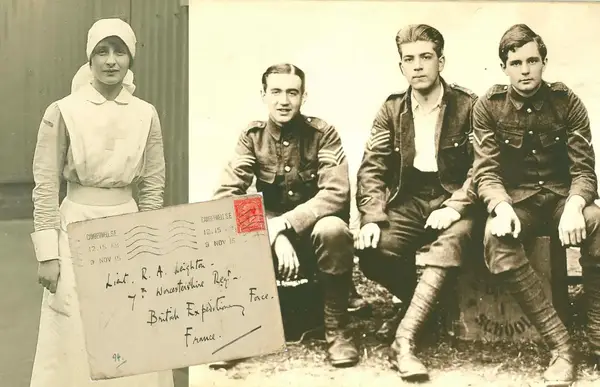
While most countries involved in World War I commemorate those who served in that and later wars on 11 November, the date the War ended, in Australia and New Zealand, the main commemoration is ANZAC Day, 25 April, the day in 1915 when their servicemen first saw action, in the disastrous Gallipoli Campaign.

Voir l'article
Logo de la revue d'appartenance Speakeasy

Sélection culturelle

This is the end…

The world of Pop culture will remember April 2019 for two things: the release of Avengers: Endgame and the final series of Game of Throne s . Both mark the culmination of tentacular stories with many iconic characters which could die at the really end… or not. As Game of Thrones approaches the midpoint of its final season*, Marvel, after eleven years and 22 movies, reaches a conclusion to the Marvel Cinematic Universe (MCU) with "Avengers: Endgame” coming into theaters on April 24. Iron Man (Robert Downey Jr.), Captain America (Chris Evans) and their fellow superheroes are getting a second shot at Thanos (Josh Brolin) after their brutal Infinity War defeat one year ago. https://youtu.be/TcMBFSGVi1c If you haven't seen all of the MCU movies, it would be a bit hard to go into this one filled with callbacks and meta winks to every movie in the series. So, if you have the time, the main arc to watch or rewatch is the one with these three films : "Captain America: Winter Soldier" (2014), "Captain America: Civil War" (2016) and "Infinity War" (2018). They are all directed by the Russo brothers and written by the same screenwriters, the same team who wrote and directed "Endgame”   What is the Marvel Cinematic Universe and why did Marvel start with these characters? The Marvel Cinematic Universe (MCU) is composed of 22 films. Each relates its own distinct story but is also connected with other films in the MCU, to tell an overarching tale. It's a technique Marvel Comics pioneer Stan Lee also used in his comics. Some Marvel characters appear in films that don't connect to the MCU because in 2007 Marvel was recovering from bankruptcy and had sold the film rights of some of the company's most popular characters like the X-Men and Spider-Man. Marvel still owned Iron Man, the Hulk, Thor and Captain America who form the core of the Avengers team. Marvel used the early MCU films to introduce these heroes, then brought these characters together for the crossover film Avengers Assemble . This crossover was planned from the very beginning. The MCU is the most successful film franchise of all time, making more than $18.4 billion so far.   Here is the complet list of the MCU films. Iron Man (2008) The Incredible Hulk (2008) Iron Man 2 (2010) Thor (2011) Captain America: The First Avenger (2011) The Avengers (2012) Iron Man 3 (2013) Thor: The Dark World (2013) Captain America: The Winter Soldier (2014) Guardians Of The Galaxy (2014) Avengers: Age Of Ultron (2015) Ant-Man (2015) Captain America: Civil War (2016) Doctor Strange (2016) Guardians Of The Galaxy Vol. 2 (2017) Spider-Man: Homecoming (2017) Thor: Ragnarok (2017) Black Panther (2018) Avengers: Infinity War (2018) Ant-Man And The Wasp (2018) Captain Marvel (2019) Avengers: Endgame (2019)     *Jon Snow, Daenerys Targaryen and their allies are set to battle the White Walkers at Winterfell. The April 28 episode stands to be the biggest action sequence in the Emmy-winning drama's history!

Voir l'article
Logo de la revue d'appartenance Speakeasy

Oops!

Oops! That’s not the right answer. Go back and try again .

Voir l'article
Logo de la revue d'appartenance Speakeasy

Take Your Students to “An American in Paris”

The Châtelet Theatre in Paris is re-opening in September and returning to its tradition of putting on large-scale musicals, in their original language. The opening offering is George and Ira Gershwin’s An American in Paris. There are special matinée performances for schools on Thursdays 12 and 19 December at 3 p.m.

Voir l'article
Logo de la revue d'appartenance Speakeasy

Aretha Franklin Honoured with a Pulitzer Prize

Soul singer Aretha Franklin has been posthumously honoured with a Pulitzer Prize. The 2019 winners list revealed on 15 April also included Richard Power’s extraordinary novel The Overstory and The New York Times and The Wall Street Journal for their investigations on President Donald Trump.

Voir l'article
Logo de la revue d'appartenance Speakeasy

Sélection culturelle

Dancing Nina Simone

Britain’s celebrated modern dance company, Rambert, is celebrating singer Nina Simone with a dance-theatre piece featuring musicians live on stage. Simone, who died in 2003, was one of the great, and unclassifiable, popular singers of the 20th century, and a strong proponent of Civil Rights.

Voir l'article
Logo de la revue d'appartenance Speakeasy

Sélection culturelle

Winter is Here

After 8 seasons, "Game of Thrones" is finally coming to an end…. until a series of prequels hit our screens.

Voir l'article
Logo de la revue d'appartenance Speakeasy

Screen Tourism: “Game of Thrones” Fans Flock to Northern Ireland

Game of Thrones may be set in the imaginary Seven Kingdoms, but it was filmed in real locations around the world. Many locations, and all the studio work, were done in Northern Ireland and the country is attracting crowds of tourists anxious to walk in the footsteps of their heroes.

Voir l'article
Logo de la revue d'appartenance Speakeasy

Sélection culturelle

Discovering Oceania

A new exhibition at the Musée Quai Branly-Jacques Chirac explores the vast continent of Oceania, where water is omnipresent in real and metaphorical senses. The exhibition was originated at the Royal Academy in London to commemorate the journeys of James Cook in search of a mythical southern continent in the late Eighteenth Century. Cook never found the inexistent land mass geographers believed must exist to balance the globe. What Cook and his crew encountered on arrival was a vast number of island civilisations covering almost a third of the world’s surface: from Tahiti in Polynesia, to the scattered archipelagos and islands of Melanesia and Micronesia. The exhibition includes unique historic artefacts from museums collections but also work by contemporary Oceanian artists around the themes of meetings, memories, past and future. Oceania: exhibition trailer from Royal Academy of Arts on Vimeo . The exhibition opens with a section on journeys. From 8000 BC till 1300 AD, skilled South Asian navigators explored the South Pacific and made its islands their homes. Common origins mean there are similarities in the languages and lifestyle of the different islanders but isolation and specific geographical conditions meant that each adapted and adopted its own specific characteristics. The exhibition is full of artefacts from across the region — often examples of indigenous cultures that Europeans collected, while trying to replace the cultures that created them with Christianity and “civilisation”. Past, Present and Future The exhibit isn’t only facing towards the past. It also features many works by contemporary artists from Oceania. A monumental blue "wave" marks the entrance of the exhibition. It is made using a traditional Maori weaving technique but it is woven from blue plastic tarpaulins which are omnipresent in Maori communities. The collective who created it share their stories and experience on the exhibition site. A magnificently carved piano again confronts indigenous and colonial culture, referring to Jane Campion’s film The Piano (1993) based on a classic New Zealand novel where the clash of cultures is exemplified by European missionaries trying to transport a grand piano to a. inaccessible place with a totally inappropriate climate for the sensitive instrument. The work, by Michael Parekowhai, is entitled He Korero Purakau mo Te Awanui o Te Motu: story of a New Zealand river. The piano, symbol of European civilisation, has been transformed in turn with the technique Maori use for the canoes or wake that transported them thousands of miles over the Pacific. In a video installation, another Maori artist, Lisa Reihana, reinvents a 19th century European representation of exotic Oceania: French artist Jean Gabriel Charvet’s panoramic wallpaper entitled The Savages of the Pacific Sea. Reihana's work, In Pursuit of Venus (Infected) , pictures Captain Cook’s expedition’s encounters with different Pacific peoples. Cook’s expedition was ostensibly a scientific mission to observe the planet Venus. Reihana reimagines the meetings of cultures from the point of view of the peoples of Oceania. Less romantic idyll and more colonial nightmare, with the arrival of infectious diseases brought by the Europeans which decimated local populations. The exhibition closes on a major contemporary problem: rising sea levels threating the future of many island nations. In this video, poet Kathy Jetnil-Kijiner from the Marshall Islands describes the attachment that island peoples have to their land. She concludes, Tell them we don’t want to leave we’ve never wanted to leave and that we are nothing without our islands. https://youtu.be/w9D88ST9qbw Océanie Musée du quai Branly Jacques Chirac Till 7 July See our webpicks for some excellent videos exploring works and themes from the exhibition.

Voir l'article
Logo de la revue d'appartenance Speakeasy

Oceania Through Videos

The Oceania exhibition that is now on at the Musée du Quai Branly in Paris originated at the Royal Academy of Arts in London. The RA has a number of videos in English online in connection with the exhibition that are excellent for class work on the topic.

Vous avez vu 1980 résultats sur 2567