


















Voir l'article
Logo de la revue d'appartenance Speakeasy

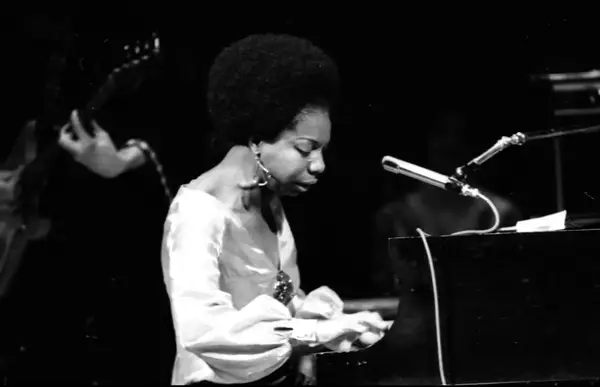
Your Students Have Talent: War Will Not Tear Us Apart

We always love to read students' work. Here are some poems pupils wrote as their final task in a sequence from Shine Bright LLCER:  File 5 War Will Not Tear Us Apart.

Voir l'article
Logo de la revue d'appartenance Speakeasy

Sélection culturelle

Downton is Back

Britain’s favourite aristocratic household is back — this time on the big screen. Downton Abbey is a flurry of activity in preparation for a royal visit.

Voir l'article
Logo de la revue d'appartenance Speakeasy

War Horse Play in Paris

One of the biggest successes in British theatre in recent years will be on stage in Paris for the first time in November and December. The National Theatre’s production of War Horse by Michael Morpurgo is an emotional rollercoaster of a story about a teenage boy and his horse during the First World War. The award-winning production will be performed in English.

Voir l'article
Logo de la revue d'appartenance Speakeasy

Celebrate Scotland in St-Germain-en-Laye

St-Germain-en-Laye in the Yvelines has a long historic connection with Scotland, and is twinned with the Scottish seaside town of Ayr. For the weekend of 21-22 September, St Germain will be taken over by kilts and bagpipes for a Highland Games.

Voir l'article
Logo de la revue d'appartenance Speakeasy

Sélection culturelle

Donna Tartt's "The Goldfinch" on Screen

The Goldfinch is a stunning coming-of-age story set in New York, Las Vegas and Amsterdam. Donna Tartt’s 2013 Pulitzer Prize-winning novel has been adapted for the screen.

Voir l'article
Logo de la revue d'appartenance Speakeasy

Sequel to "The Handmaid’s Tale"

The literary event of the year in the Anglophone world is Margaret Atwood’s sequel to The Handmaid’s Tale 34 years after the original.

Voir l'article
Logo de la revue d'appartenance Speakeasy

Rendez-vous

Word of the Moment: Prorogation

The noun prorogation and the verb prorogue were not part of most British people's vocabulary until August 2019. Now, they're the words on everyone's lips.

Voir l'article
Logo de la revue d'appartenance NRP

Lycée : le retour de l’explication linéaire

Après des années où le commentaire dit « composé » était roi, c’est désormais une explication de texte linéaire qui sera demandée aux élèves à l’oral. Daniel Bergez, auteur de plusieurs ouvrages consacrés à cet exercice, le défend, et esquisse une méthode. Signalons ici que les nouveaux manuels de Français 2 de et 1 re Nathan issus de la collection « Horizons Pluriels » donnent à lire aux classes, en version numérique, des textes littéraires enrichis de leur analyse linéaire. Des ressources interactives qui proposent une autre manière de s’emparer du texte. Explication vs commentaire • Qu’appeler « explication de texte » ? Pour certains anciens élèves, l’expression peut rappeler des souvenirs d’ennui liés à une paraphrase qui ne faisait que redoubler le texte sans lui faire gagner en signification. Pour d’autres à l’inverse, l’explication de texte s’est révélée la meilleure porte d’accès à la richesse d’un texte littéraire. C’est bien sûr à cela qu’il faut viser. • La circulaire ministérielle précise, entre parenthèses, que « la méthode est laissée au choix du professeur ». Mais il est par ailleurs fait mention d’un autre exercice, le « commentaire de texte ». Ce que l’on entend par « explication de texte » se déduit a contrario de la différence entre les deux expressions : le commentaire considère le texte globalement, sous l’angle de plusieurs thèmes, ou questions (la conduite du récit ; l’évolution d’un personnage ; l’atmosphère fantastique…), en collectant dans l’ensemble de l’extrait les occurrences qui leur correspondent. En revanche, l’explication de texte (qui vise le même but : éclairer la teneur littéraire du passage) en suit la chronologie ; le début de l’explication commence par le début du passage, et s’achève par la fin de celui-ci. Origine et nature de l’explication de texte • Cette démarche, qui pourrait par caricature s’apparenter à un mot à mot un peu fastidieux, repose sur toute une tradition qui la légitime : elle prolonge le travail d’herméneutique (art de l’interprétation), qui s’origine dans la Grèce ancienne, et s’est pendant des siècles appliquée au commentaire de la Bible (dont on distinguait plusieurs niveaux de signification). On la retrouve, pratiquée librement et avec éclat, dans Mimésis d’Eric Auerbach (Gallimard, coll. « Tel ») : formé à l’école de la philologie allemande, le critique y travaille sur des extraits successifs de toute la littérature occidentale, de Homère à Virginia Woolf ; sur les passages qu’il cite en premier, il déploie d’abord une approche linguistique, grammaticale, interrogeant le sens des mots, montrant la résonance des expressions, avant de déboucher à chaque fois sur des interprétations globales très fécondes de la vision du monde et de l’esthétique des auteurs. • La difficulté de l’explication réside dans l’ambiguïté de la position du commentateur : il se laisse guider par le texte, qu’il suit dans son déroulement, tout en l’éclairant par des analyses qui dépassent le point précis du texte où il se trouve. C’est une position à la fois passive et active, qui mêle ce que le critique Jean Starobinski appelait l’attitude de sympathie et l’attitude de surplomb. Elle a l’avantage d’accompagner le mouvement naturel, linéaire, de la lecture, et de rendre compte des effets de sens au fur et à mesure de leur apparition dans le texte. Elle a néanmoins l’inconvénient, si le commentateur n’est pas bien inspiré, ou suffisamment habile, de frôler parfois la paraphrase ; et l’élève se demande alors : « à quoi bon redire ce que le texte formule déjà ? ». Pour éviter cet écueil, il faut bien sûr se fixer successivement sur les points saillants du texte (mots, expressions, syntaxe, « thèmes » apparaissant, ponctuation même, rythmes, etc.), et à chaque fois les mettre en rapport avec des enjeux majeurs du texte. Déroulement de l’explication de texte Concrètement, dans la pratique, l’exercice obéit au schéma traditionnel, lui-même tiré de la rhétorique antique, qui vaut tout autant pour une dissertation ou un commentaire  : L’introduction Comme le terme l’indique, elle présente le texte, le situe (dans une œuvre, dans la vie d’un auteur, dans un courant littéraire, etc.), et en indique rapidement la teneur, et les centres d’intérêts importants. La lecture du texte Comme l’indiquent les instructions officielles, elle doit être « expressive ». Une excellente lecture, qui sait faire « respirer » un texte, met en valeur ses aspects importants, varie éventuellement les tons (comme on le ferait au théâtre) signifie déjà une excellente compréhension du texte, et dispose l’auditeur à entendre attentivement la suite. Une réflexion sur la composition du texte La composition n’est pas seulement un plan descriptif, mais une compréhension de l’organisation du passage, éclairant sa construction. Une définition de grands axes de réflexion Ces axes sont l’équivalent de ce que seraient les titres des parties d’un commentaire composé ; cela permet de cadrer par avance les analyses, qu’on rattachera à ces enjeux au cours de l’explication. L’explication proprement dite On prend le texte dans son déroulement, phrase après phrase, en relevant les éléments importants qui construisent le  sens, et appellent un commentaire (mots à double sens, étymologies, figures de style, motifs thématiques, etc.). C’est la partie proprement explicative, qui est à la fois la plus intéressante et la plus difficile, car elle nécessite d’utiliser en permanence une double focale : en commentant et éclairant un détail, on n’oublie pas de le rattacher à l’ensemble de la page. Et l’on progresse de plus en plus dans la compréhension de celle-ci en approfondissant la réflexion sur les enjeux définis initialement. La conclusion Elle fait le bilan de l’explication, en reformulant les enjeux initiaux à la lumière des explications qu’on a données. Elle montre la progression qu’on a accomplie dans la compréhension des effets de sens et des centres d’intérêt du passage. Elle peut bien sûr s’achever, si l’on a le temps, en élargissant la réflexion à l’esthétique d’ensemble ou à la vision du monde de l’écrivain. Difficultés et démarche La grande difficulté, et aussi le plus grand intérêt, de l’explication de texte, résident dans le moment central, où l’on suit le déroulement du passage. Il faut à la fois choisir successivement les éléments que l’on va expliquer et commenter, et les raccorder les uns aux autres, pour construire à terme une vision d’ensemble du texte. Pour y parvenir, le mieux est de bien choisir, à chaque fois : - la partie du texte sur laquelle on travaille ; ce peut être une phrase ou deux, une strophe, un ou deux vers, formant une unité de sens ; on peut relire chacun de ces ensembles avant de le commenter ; - ce que l’on va commenter dans la partie choisie. Comme il est bien sûr exclu de tout analyser, il faut retenir uniquement les éléments importants : un syntagme, une mage, un effet d’allitération, etc. La bonne explication, comme le bon commentaire, évite naturellement la paraphrase, qui n’apporte rien, et redouble inutilement le texte. Il faut donc à chaque fois poser la question du sens et des effets produits sur le lecteur, en même temps que celle des intentions de l’auteur : c’est en croisant, ou alternant, ces différentes perspectives, que l’on est fidèle à la nature d’un texte littéraire. En rester à une taxinomie qui identifie les figures de rhétorique, par exemple, n’apporte guère : encore faut-il se demander pourquoi l’auteur a choisi une métaphore (et non pas une comparaison par exemple), pourquoi il l’a choisie dans tel champ lexical, ce que cela apporte à cet endroit du texte, les échos qu’on peut y trouver ailleurs, etc. De la sorte on fait apparaître la profondeur et l’épaisseur d’un texte littéraire, qui croise les significations, comme l’indique l’étymologie du mot « texte » (qui vient du latin textum , littéralement « tissé »). En révélant cette richesse et ce maillage de significations et d’effets divers, l’explication justifie également son étymologie : « expliquer » (du latin ex-plicare ), c‘est d’abord déplier, faire apparaître à la surface ce qui est contenu dans l’épaisseur et les plis de ce tissage de mots qu’est un texte littéraire.

Voir l'article

2

Ressources
complémentaires

Un calcio al razzismo

Ce document iconographique vous est proposé accompagné d'une fiche pédagogique téléchargeable.     …

Voir l'article

2

Ressources
complémentaires

Ritratti

Una ragazza italiana descrive la sua migliore amica e, attraverso di lei, anche se stessa.

Voir l'article
Logo de la revue d'appartenance Speakeasy

Sélection culturelle

Women's Voices at Deauville 2019

The 45th Deauville American film festival, taking place from 6 to 15 September, has a particularly feminine slant this year, with a large number of female-directed films, and two women jury presidents, Catherine Deneuve for the competition jury, and Anna Mouglalis for the revelation jury.

Voir l'article
Logo de la revue d'appartenance Speakeasy

On Route 66

Route 66 has mythical status in the U.S.A. and around the world. It’s been immortalised in songs, novels and films. Although it’s no longer a major highway, it still draws visitors keen to experience the iconic home of the road trip. Every September, enthusiasts gather in Springfield, Illinois, for the Mother Road Festival, using the nickname coined by novelist John Steinbeck for Route 66. For a weekend, Springfield echos to the sound of vintage cars from the road's heyday , not to mention Nat King Cole urging them to "get your kicks on Route 66". Probably the most famous road in the world, Route 66 has been in terminal decline since the 1980s. But like all good myths, it lives in the hearts and minds of people across the U.S.A. and beyond. Route 66 ran 2,448 miles from Chicago to Los Angeles. It’s always described in that direction, as if it was fundamentally linked to the country’s historical expansion west. In fact Cyrus Avery, an Oklahoma businessman who had been instrumental in getting the highway built, had travelled west in a wagon train as a boy. Avery was one of the people pushing for a decent road network to match the increase in cars on the roads. There were half a million registered motor vehicles in the U.S.A. in 1910. That rose to 10 million ten years later. The first sections of Route 66 opened in 1926. During the Great Depression in the 1930s, it saw the hundreds of thousands of migrants fleeing the Dust Bowl in the Mid-West who were immortalised in Steinbeck’s The Grapes of Wrath . Ironically, it was finally completely paved between 1933 and 1937 by the unemployed given work by Roosevelt’s New Deal solution to the Depression. Trucking and Tourism In the early days of the road it was adopted by the new road cargo industry that was taking over from trains in the movement of freight. The diagonal route of Highway 66 linked agricultural producers in the Midwest with the booming urban centers of California. It avoided the northern routes that were prone to bad winter weather. From the outset, Route 66 was a leisure and tourism destination. In 1927, just a year after it opened, the U.S. Highway 66 Association was founded to boost tourism. Soon cabin camps, motels, diners and eccentric roadside art were put up to cater to tourists. After World War II, as prosperity to returned to the country, Americans loved to spend their hard-earned cash and leisure time on road trips. For the Beat Generation, that desire for movement seemed to become an end in itself. It was immortalised in Jack Kerouac's On The Road , published in 1957 but based on diaries of his road trips from the late 40s. The Beginning of the End Route 66 was born out of one technological revolution and eclipsed by another. Trucks and automobiles had become so much part of American life that they were literally destroying the highways that hadn't been designed for this enormous increase in volume. During the Cold War, President Eisenhower advocated developing a modern highway network modeled on the German Autobahns he had seen used to great effect to move troops during World War II. He believed it was critical to be able to move troops rapidly in the event of attack. So he persuaded Congress to pass the Federal Aid Highway Act in 1956, financing a new network of four-lane Interstates. It was the death knell for Route 66 and it’s like. In 1985, Highway 66 was finally decommissioned, meaning the state wouldn't ensure its continued upkeep. Nevertheless, the road remains imprinted on the American psyche and still attracts visitors from far and wide. Various schemes are trying to protect part or all of the road. Parts of it are listed on the National Register of Historic Places, or as National Scenic Byways. When Congress passed the Route 66 Study Act 1990, mandating the National Park Service to consider plans to preserve the road, it recognized that Route 66 had, "Become a symbol of the American people’s heritage of travel and their legacy of seeking a better life."     You can download this poster for your class. Have a good trip! You can find documents on Kerouac's On th e Road, Steinbeck's The Grapes of Wrath , Dorothea Lange's Dust Bowl migrant photos and Route 66 in  Shine Bright 1re Advanced File 4: "On the Road".

Voir l'article

1

Ressources
complémentaires

Logo de la revue d'appartenance Speakeasy

On Route 66 Poster

Celebrate the Mother Road festival in September with this illustrated Route 66 poster has lots of interesting landmarks to be found along "American's Main Street". You can download it for class use.

Voir l'article
Logo de la revue d'appartenance Speakeasy

Illustrated Route 66 Poster

To accompany Shine Bright 1re Advanced File 4: "On the Road, you can download this Route 66 poster illustrated with lots of interesting landmarks to be found along the Mother Road. 

Voir l'article
Logo de la revue d'appartenance Speakeasy

Language and Literature: English Speciality

Are you going to be teaching LLCER this year? We can help! Shine Bright 1e has four sequences covering both themes. Look out for LLCER resources on Speakeasy-news. And in October we’ll be publishing reading guides to four of the literary works on the curriculum. Watch our video to find out more!

Voir l'article
Logo de la revue d'appartenance Speakeasy

Rendez-vous

Boris Johnson at Number Ten

Britain has a new Prime Minister. After a two-month voting process following Theresa May’s resignation, the Conservative Party announced the name of its new leader on 23 July. On 24 July the Queen invited Boris Johnson to form a government.

Voir l'article
Logo de la revue d'appartenance Speakeasy

Keith Haring: Fast Art

Keith Haring grew up in small town Pennsylvania reading, watching and drawing cartoons. When the 20-year-old arrived in New York City to study art in 1978, his fast, cartoonish style was soon recognisable all over the city. A retrospective at Tate Liverpool, then going onto Brussels, shows the astonishing output of his short life.

Voir l'article
Logo de la revue d'appartenance Speakeasy

Take Your Classes to the Cinema in Dinard!

The 30th edition of the Dinard British Film Festival will take place in the Breton town from 25 to 29 September. The films in competition haven’t been announced yet, but you can get ready to sign up your classes to see some of the best British films from the last year at special schools showings. It’s a big year for biopics with Mary Shelley, Mary Queen of Scots and Bohemian Rhapsody. There are up to 4 showings a day from Monday 16 to Tuesday 24 September. Reservations open on Thursday 29 August but you can already decide what interests you. The films on offer are: Primary and Collège Fantastic Beasts and Where to Find Them by David Yates The first instalment of JK Rowling’s Harry Potter spin-off series. Our A2 Ready-to-Use Resource will help you prepare classes. Collège & Lycée Mary Shelley by Haifaa Al Mansour The biopic of the Frankenstein author's early life. Don’t miss our audio interview with the director . Lycée Bohemian Rhapsody by Bryan Singer Rami Malek's Oscar-winning performance as Freddie Mercury in the biopic commissioned by the remaining members of Queen. Mary Queen of Scots by Josie Rourke The theatralised story of the relationship between Mary Queen of Scots and Elizabeth I of England. Our Ready-to-Use Resource will help give classes some background to the complex history. Reservations open at 8 a.m . on Thursday 29 August by telephone on 02 99 16 86 96. The showings cost 4 euros per pupil.

Voir l'article
Logo de la revue d'appartenance Speakeasy

Singing for Freedom

South African singer, musician, dancer and activist Johnny Clegg has died at the age of 66. His music was an influential part of his participation in the anti-Apartheid campaign.

Voir l'article
Logo de la revue d'appartenance Speakeasy

Digital Democracy in Hong Kong Protests

Hong Kong citizens have been protesting for weeks against a law they say would stifle political opposition by allowing activists to be extradited to mainland China for trial. In the face of surveillance, activists in the former British colony are turning to web apps to anonymously organise protests, or even vote on their next actions.

Voir l'article
Logo de la revue d'appartenance Speakeasy

Landing on the Moon

NASA is marking the fiftieth anniversary of the first Moon landings. Fifty years after Neil Armstrong and Buzz Aldrin walked on the Moon, and 47 years after the end of the Apollo program, the U.S. space agency is preparing to go back to the Moon by 2024.

Voir l'article
Logo de la revue d'appartenance Speakeasy

Virginia Woolf Love Story

A new biopic, Vita and Virginia, tells the story of author Virginia Woolf's relationship with aristocrat Vita Sackville-West, which resulted in one of the most innovative novels of the early twentieth century, Orlando . Apart from an interest in literature and writing, nothing destined Virginia Woolf and Vita Sackville-West to meet, never mind form a relationship. Vita was a bubbly, well-connected socialite, daughter of a baron. Her real name was Victoria, but that was far too staid for a modern age that was turning its back in Victorian morals. She wrote novels, which sold reasonably well, and designed gardens. Woolf meanwhile was a much more introverted character from an upper-middle-class background. According to the Oxford Dictionary of National Biography , when her half-brother tried to introduce her to London society, “It was a failure: at social events Virginia would know and speak to nobody all evening and would stand, crushed by the crowd, against a wall. On one occasion she managed to read Tennyson behind a curtain.” She and her husband Leonard were leading lights of the Bloomsbury Group of modernist writers and they ran an avant-garde publishing company, the Hogarth Press, which championed T S Eliot, Sigmund Freud, Katherine Mansfield, E M Forster, and published their own work. Virginia’s work included novels, where she used stream-of-consciousness narration, biography and many essays, particularly on feminist themes. Vita & Virginia   is adapted from a play of the same name by Eileen Atkins, which was based on correspondence between the women. Both left enormous archives of letters and diaries. Vita’s earliest relationships had been with women. Her marriage was one of convenience — her husband was more interested in men. Virginia also had many friendships with women, though her sexuality was permanently marked by sexual abuse she suffered from her half-brother as an adolescent. The women’s relationship was more intellectual than physical, with Virginia watching in awe as Vita, bold, androgynous, adventurous, did all the things that Virginia didn’t dare to do. She showed this vicarious imagination in Orlando (1928), inspired by Vita, whose titular character is so "larger-than-life" that he/she survives more than 300 years from Elizabethan time, changing gender several times. https://youtu.be/vJzT1xawcUU Biography of a biographer Woolf was well-schooled in biography. Her father was the founder editor of the Dictionary of National Biography. Woolf herself wrote many biographical essays about women not recorded or under-recorded in “official” history. Vita and Virginia director Chanya Button points out, “The nature of biography is one of the themes of the film. She could have written a traditional biography of Vita Sackville-West, but she didn’t. She wrote Orlando, which was an imaginative novel. One that has a protagonist that travels across 300 years of history and morphs from male to female.” Vita and Virginia On general release 10 July This film makes a good addition to Shine Bright 1ère Advanced File 1: "Brave New Women", a sequence for Spécialité LLCE on ton women and dystopias. It includes an extract from Woolf's A Room of One's Own where she imagines what life would have been like for Shakespeare's imaginary sister.  

Vous avez vu 1920 résultats sur 2567