













Voir l'article

1

Ressources
complémentaires

Ressource vidéo

L’élaboration de la loi

De l'initiative à la promulgation : voyage au cœur du processus législatif entre Gouvernement et les deux chambres du Parlement.

Voir l'article
Logo de la revue d'appartenance Speakeasy

Earth Day 2022

April 22 is Earth Day and its organisers are encouraging us all to "invest in our planet", the theme of this year's event. It certainly needs us all to pay more attention to its needs. Earthday.org and NASA provide lots information and teaching tools to engage students and offer practical actions to take.

Voir l'article
Logo de la revue d'appartenance Speakeasy

Historic Supreme Court Nomination

On 7 April, the U.S. Senate confirmed the nomination of Judge Ketanji Brown Jackson as a Supreme Court Justice — the first ever African-American woman in the court's 233-year history. Despite hostile Senate hearings, three Republican Senators gave their votes to confirm the nomination.  When he fulfilled an election promise by nominating Ms. Brown Jackson, President Biden explained, “For too long our government, our courts haven’t looked like America.” President Biden nominated Ms Brown Jackson after Justice Stephen Breyer announced he would retire this summer. Supreme Court Justices are appointed for life. They are nominated by the President but have to be confirmed by the Senate. Breyer is currently one of three “liberal” Justices along with six “conservatives”. Presidents generally nominate Justices associated with their own politics, so liberal Brown Jackson was a logical pick for Biden. Since the Senate is currently split 50-50 Republican and Democrat, the nomination was likely to pass, as Vice-President Kamala Harris has a casting vote. In the event, three Republican Senators “crossed the aisle” to support the nomination. If any Democratic Senators lose their seats at the Midterm elections in November, this may be Biden’s only opportunity to have a nominated judge confirmed. Justice Brown Jackson Brown Jackson,51, has had a long career in many aspects of the justice system. She was brought up in Florida, and  pointed out in her confirmation speech t hat her family has gone from segregation to Supreme Court Justice in one generation. Both her parents were teachers. Her mother went on to be a school administrator. Her father went to law school when Brown Jackson was a child, inspiring her to follow in his footsteps She studied at Harvard and was was editor of the Harvard Law Review like one of her role models, Barack Obama. After law school, she worked as a clerk for Justice Stephen Breyer, a public defender and a defense attorney in private practice. She served as a District Court Judge before joining the DC District Court of Appeals last year. When President Obama was nominating a Justice in 2016, Brown Jackson’s the-11-year-old daughter wrote to him asking to add her mother to his list. In over 200 years, 120 Justices have served on the Supreme Court, 115 of them men and 117 white. The first woman, Sandra Day Connor, was only appointed in 1981. The first African American Justice was Thurgood Marshall, appointed in 1967 by President Lyndon Johnson, after he led the NAACP case in Brown Vs Board of Education, the landmark ruling on school desegregation. Defenders vs. Prosecutors Marshall was also the last Justice before Brown Jackson who had experience as a public defender — a lawyer appointed by the courts to defend the accused. Of the judges in the U.S. court system as a whole, former prosecutors outnumber defense attorneys by four to one according to a recent study by the Cato Institute . It could be argued that having preponderance of judges whose principal experience is on one side or the other of the prosecution-defence divide can skew the system in one direction.  Some of the most aggressive and hostile questioning Brown Jackson faced from Republican senators during the confirmation hearings was about her time was a public defender, implying that by defending criminals she somehow sided with them. You can find more on  the need for reform in the U.S. justice system in Shine Bright AMC File 15 Justice for all?

Voir l'article
Logo de la revue d'appartenance Speakeasy

The Invictus Games are Back

The Invictus Games for injured and sick military personnel and veterans was founded by Prince Harry, himself a veteran, in 2014. The Invictus Games 2020, the fifth edition, are finally being held from 6 to 13 April 2022 in the Hague, Netherlands. More than 500 participants from 20 countries will compete. As importantly, they will be accompanied by friends and family who have helped them in their recovery. Prince Harry was inspired to create the games after attending the Warrior Games in the U.S.A. He wanted to take the concept of helping service personnel in their recovery through sport, but add an international element, bringing together athletes from around the world. The first event in London in 2014 surpassed even the organisers’ hopes, showcasing inspiring stories of resilience from the athletes. https://youtu.be/PpnYcXJVWNM The Games’ motto is a neat variation on Julius Caesar’s “Veni, vedi, vici” (I came, I saw, I conquered): We came. We saw. We are unconquered. That chimes with the poem “Invictus” which inspired Nelson Mandela in prison, and which gave its name to the games. William Henley (1849–1903), the poet, knew what it was like to suffer from ill health – he developed tubercular arthritis as a teenager and had to have a leg amputated. Christ Martin from Coldplay took the last lines of the poem as the chorus to the anthem he wrote for the Games: I am the master of my fate, I am the captain of my soul. [embed]https://youtu.be/XFM5dgPoLrE[/embed] In the Hague , 500 competitors will participate in one or more out of the ten sports: athletics, archery, cycling, indoor rowing, a driving challenge, powerlifting, sitting volleyball, swimming, wheelchair basketball, and wheelchair rugby. Competitors are using sport to help them recover from both physical injuries and the effects combat can have on mental health. Prince Harry is still very much involved in the Games, as can be seen in this tongue-in-cheek  video of him trying to learn some Dutch before the opening ceremony. [embed]https://youtu.be/N_Zu0vd0g5M[/embed] The next games are planned in Düsseldorf, Germany, in 2023.   You can find a whole SnapFile on the Invictus Games in Shine Bright Terminale: Snapfile 21.

Voir l'article
Logo de la revue d'appartenance Speakeasy

Spies Fooling Spies

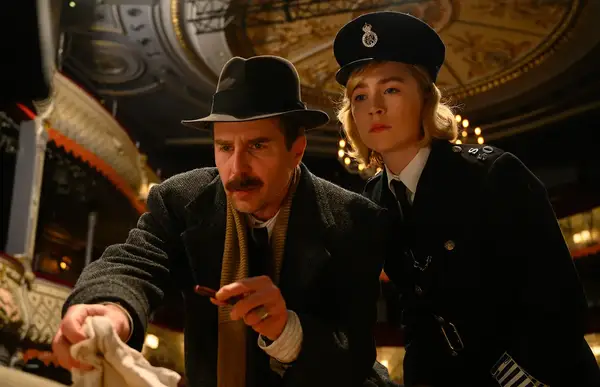
A new film details a barely believable operation from World War II involving a dead body designed to fool the Nazis about Allied invasion plans and save the lives of thousands of soldiers. The success of Operation Mincemeat hinged on creating a carefully crafted fiction, which is where James Bond author Ian Fleming came in. Fleming hadn’t created Bond yet, he was an espionage officer in the British military. In 1943 Allies were planning to invade the Italian island of Sicily to open a new front.  But trying to invade a heavily defended island meant risking heavy casualties — men disembarking from small boats would be easy targets. To make things worse, the Allies believed the Axis forces had obtained some intelligence about the plans. It was essential to divert attention from Sicily to other possible invasion points. And so a group of spies came up with a plan to plant a dead body which seemed to be carrying confidential plans to invade Greece instead. The body would be dumped in the sea off the Spanish coast in the hope that Nazi agents in the non-aligned country would get wind of its discovery. Nothing was certain in this scenario — the body could disappear, or not come to the Nazis’ notice. But if it was found, the Allied espionage team were determined that their plant would be as believable as possible. A body with nothing in it except a uniform and top-secret papers would raise suspicions. So the spies set out to create a life story for the corpse, and leave clues on his body. Mundane things like a  receipt for an engagement ring or a theatre ticket dated in the right time frame for someone coming from London as a message courier. A photo of his girlfriend. The tiny signs of civilian life that all of us carry around. Several of the team working on the subterfuge were amateur or published authors. Among them, Ian Fleming, who would go on to write the James Bond novels after the war (and help found the CIA.) Although this operation, based in a dingy London basement, was far from the glamour of Bond’s missions, it required all of Fleming’s imaginative skills to transform the corpse of a homeless man into “Major William Martin”. https://www.youtube.com/watch?v=YQ7ZXOXHZ20 This short video from the National Archives shows some of the documents and artefacts from the real Operation Mincemeat. https://youtu.be/XX7Jy0FX278?t=17 Operation Mincemeat On general release 27 April.   You could link this film with Shine Bright 3e SnapFile 1 Join the Spy School.

Voir l'article
Logo de la revue d'appartenance Speakeasy

The Big Jubilee Read

Do some armchair travelling with the Big Jubilee Read: a list of 70 books, ten for each decade of Queen Elizabeth II’s record-breaking reign. As befits its head, the authors and settings range all over the Commonwealth: representing 31 countries on six continents. It includes eight Nobel Literature Laureates, and a lot of Booker Prize winners.

Voir l'article
Logo de la revue d'appartenance Speakeasy

They Spoke and They Conquered

Back in January, we announced this year's Cicéronnades competition organised by the Académie of Orléans-Tours, which enncourages pupils to video themselves reciting a poem or prose text. The winners have just been announced, as part of la semaine des langues vivantes.  The Académie of Orléans-Tours is organising a competition for pupils to recite texts in the languages they are learning, which is open to pupils and students (up to the third year of university) all over France and in lycées français abroad. For its second year, the competition, open to pupils and students (up to the third year of university) all over France and in lycées français abroad, covered a wide range of modern languages (Arabic, Chinese, English, French as a foreign language, French as a second language, German, Italian, Japanese, Portuguese, Russian, Spanish and Turkish) as well as ancient Greek and Latin. Individual pupils make a simple video of themselves reciting their text. The deadline for entries is 11 March 2022, and the winners will be announced on 8 April. For secondary pupils, there were set texts, one a poem and the other a speech. For collège (cycle 4)  , the poem was by Victorian poet Ernest Dowson, tled in Latin "Vitae Summa Brevis Spem Nos Vetat Incohare Longam" . For lycée it is William Shakespeare's sonnet number 12, "When I Do Count the Clock that Tells the Time". For c ollège pupils the speech was one given by a young Ugandan climate justice activist, Vanessa Nakate, at a conference on Earth Day 2021.  For lycée , pupils could recite a speech made by Britain's Prince Charles to the COP21 conference in 2015. For collège , the three winners in English are: First prize: Eléa Schott-Barta, Collège Paul-Louis Courier, Tours. Second prize: Fiona Tuvee, Collège Victor Hugo, Puiseaux Third prize: Jean-David Carouée, Collège Pablo Picasso, Charette-sur-Loing And for lycée : First prize: Faustine Pareau-Deniau, Lycée Marceau, Chartres Second prize: Leopold Grindel-Chollet, Lycée Thérès Planiol, Loches Third prize: Maëlle  Gombart-Roze, Lycée Maurice Genevoix, Ingré Congratulations to all of you! You'll find the winners in the different languages and levels as well as all the texts for contest on the Académie Orléans-Tours website  .  

Voir l'article

1

Ressources
complémentaires

Quel est le processus d’adhésion à l’UE ?

Une présentation simple et courte expliquant les enjeux, les conditions et les étapes de l’intégration à l'UE.

Voir l'article
Logo de la revue d'appartenance Speakeasy

Sélection culturelle

Free Celtic Film Festival

The second edition of the Festival du film celtique will take place at the Cité internationale des arts in Paris on the evenings of 11 and 12 April.  Feature and short films from Scotland and Wales will be shown, with lots of opportunity to talk to filmmakers.

Voir l'article
Logo de la revue d'appartenance Speakeasy

Sélection culturelle

And the Oscar Winners Are…

The 2022 Oscar ceremony was memorable… But what about the winning films? Several of our favourite films of the last year came away with awards. And CODA beat off some favourites to take Best Picture.

Voir l'article
Logo de la revue d'appartenance Speakeasy

Sélection culturelle

Lyon: Crime (Fiction) Capital

France’s biggest crime-fiction festival is back at its usual time of year, 1-3 April, after a Covid-delayed edition in July 2021. For its 18 th edition it has a large roll-call of writers from France and around the world, including many from the U.K. and the U.S. Alongside stars like Harlan Coben, John Grisham and Paula Hawkins, you’ll also find the cream of Scottish noir: Val McDermid, Irvine Welsh, Abir Mukherjee, and the wonderful Chris Brookmyre. (If you don’t know his work, you don’t know what you’re missing!) If you haven’t discovered him yet, Richard Osman, comic turned bestselling crime author, who has set his books in an old-people’s community that has a Thursday murder club (the point being to solve cold cases, not to commit murders, although...) Alongside stars like Harlan Coben, John Grisham and Paula Hawkins, you’ll also find the cream of Scottish noir: Val McDermid, Irvine Welsh, Abir Mukherjee, and the wonderful Chris Brookmyre. (If you don’t know his work, you don’t know what you’re missing!) If you haven’t discovered him yet you can meet Richard Osman, comic turned bestselling crime author, who has set his books in an old-people’s community that has a Thursday murder club (the point being to solve cold cases, not to commit murders.) On Saturday at 2.30 p.m. there’s a presentation of a crime novel written by a binational duo of authors, one French and one German. It’s called Terminus Leipzig , by Jérôme Leroy and Max Annas. At 4.30 there’s an hour with John Grisham on the differences between the U.S. and French justice systems. Just time to get a few books signed in between! At 5 p.m., three American authors, Kimi Cunningham Grant, David Joy and John Woods, will discuss a region that fascinates them, the Appalachian mountains . And for a complete change of scene, a South African meal at 7.30 with three authors, Deon Meyer, Caryl Férey et Max Annas and a Cape Town chef. It’s worth getting up early on Sunday for a 9.30 cruise on the Rhine with Girl on the Train author Paula Hawkins . At 10.30, catch Val McDermid discussing the importance of place in crime fiction with French author Sonja Delzongle and Arnaldur Indriðason from Island. Or at 11, join a discussion about the modern “cosy” mystery (think Cluedo or Agatha Christie) with British authors S. J. Bennett and Richard Osman, and Jeon Gunwoo from South Korea. Would-be crime writers will have to choose between two events centred more on the technique of crime fiction at 2 p.m. on Sunday, one on suspense and the other on action . (The latter is a chance to meet Chris Brookmyre.) At 5, you can catch a discussion about using real historical characters in crime fiction with British authors S. J. Bennett and Abir Mukherjee,  Peter Dempf from Germany and Raphaël Malkin from France. There’s also space in the programme for film and TV adaptations. On Thursday at 7 p.m., Michel Barnier will discuss Hitchcock and suspense. On Friday 1 st at 3.45 p.m., a preview showing of Irvine Welsh’s TV series Crime , and a chance to talk to the Trainspotting author afterwards. [embed]https://youtu.be/pTGGUF4euTE[/embed] Don’t miss Daniel Craig in a very different role from Bond in Knives Out on Friday at 8.30: a crime film about the murder of a crime writer called Harlan. [embed]https://youtu.be/tn68kE6UkVQ[/embed] Talking of Harlans, catch Harlan Coben by video link for a showing of his “made in France” film Ne le dis à personne directed by Guillaume Canet, also on Friday at 8.30. Three of American director Michael Mann ’s urban crime films will be shown on Friday and Sunday, Thief, Heat and Miami Vice. There are lots more events, games, exhibitions and music. Check out the programme . Quais du polar 1-3 April at various venues in Lyon.  

Voir l'article
Logo de la revue d'appartenance Speakeasy

Sélection culturelle

Canadian Film Festival in Dieppe

Dieppe will be celebrating Canadian films, in English and French, from 24 to 27 March.

Voir l'article

1

Ressources
complémentaires

La société coloniale en Algérie

Une reconstitution de la société coloniale algérienne et de ses inégalités, à partir d'images d'archives.

Voir l'article
Logo de la revue d'appartenance Speakeasy

Teaching with Films: Belfast

The trailer and the featurette for Belfast are both used in our Ready-to-use resource on the film.

Voir l'article

3

Ressources
complémentaires

Logo de la revue d'appartenance Speakeasy

Film Vocabulary

This worksheet was used as in introductory activity to a project on film musicals for 4e euro. You can read about the project in our Pedagogy section.

Voir l'article
Logo de la revue d'appartenance Speakeasy

Put on a Red Nose and Fundraise

Red Nose Day is back on Friday 18 March in the UK.  British charity Comic Relief has been encouraging people to don a clown's red nose and "do something funny for money" since 1988. This year, the event returns to its annual slot and Sport Relief will be back later in the year in conjunction with the Commonwealth Games in Birmingham (28 July-8 August).

Voir l'article
Logo de la revue d'appartenance NRP

Vitali Konstantinov, La grande histoire de l’écriture, de l’écriture cunéiforme aux émojis

Par Camille Lacour Les métamorphoses de l’écriture Des symboles cunéiformes, créés dans un système de logogrammes, jusqu’aux irremplaçables émojis de nos smartphones, l’écriture a connu d’innombrables formes et évolutions au cours du temps. Avec beaucoup d’humour, La Grande Histoire de l’écriture , album jeunesse écrit et illustré par Vitali Konstantinov, présente les traits que les caractères, l’alphabet et les encodages ont revêtus depuis la Préhistoire. L’album se découpe en trois parties. La première reprend les bases de l’écriture, dévoilant l’alphabet phonétique international (API), cette description des sons présents dans toutes les langues. La seconde partie dévoile toutes les écritures que les peuples ont su élaborer, en commençant par l’écriture cunéiforme, née à Sumer (l’actuel Irak), qui se répandit parmi les peuples voisins tout en s’adaptant à des dialectes différents. Enfin, la dernière partie s’intéresse aux alphabets proches du nôtre, mais aussi aux univers de Tolkien et de Star Trek , mondes dans lesquels sont imaginées des nouvelles langues pleines de surprises. À travers cet album, Vital Konstantinov offre un réel plaisir aux amoureux des Lettres. Tantôt drôle, tantôt instructif, il retrace de façon chronologique l’histoire de l’écriture selon les époques, les lieux et les cultures. Les illustrations donnent une certaine dynamique au texte, lui apportant ce côté ludique et attrayant qui aideront les plus jeunes à retenir les informations plus facilement. Il pourra, peut-être aussi, nous redonner goût au glissement de la pointe du stylo-plume à la surface du papier blanc… Vitali Konstantinov, La grande histoire de l’écriture, de l’écriture cunéiforme aux émojis , Éditions La joie de lire, 80 pages, 24,90 €  

Voir l'article
Logo de la revue d'appartenance Speakeasy

Discovering musicals with 4e euro

Cultural projects based around a trip or an exchange with an English-speaking country have been curtailed by the pandemic. But necessity is the mother of invention, so two teachers in Toulouse decided to open their students’ horizons through studying musical films (Singin’ in the Rain, West Side Story and La La Land) thanks to their local cinemathèque.

Voir l'article
Logo de la revue d'appartenance Speakeasy

In the Streets of Belfast

Belfast is actor-director Kenneth Branagh‘s most personal film yet. It’s the story of nine-year-old Buddy growing up in Belfast in a friendly, working-class community until the Troubles brutally disrupt his life in 1969. Belfast is set in 1969, when what were called “the Troubles” went from protests to violent riots in the space of a weekend. Opposition to British colonial rule of Ireland had led to Irish independence in 1921. But the population of the six north-eastern counties chose to remain part of the U.K., as Northern Ireland. The majority of the population was Protestant and often Unionist, supporting remaining in the U.K. A significant minority was Catholic and often Republican, supporting the unification of all of Ireland. The Catholic population was generally poorer and excluded from the best-paying jobs, best places to live, and limited in their access to the political system. From 1967 there had been a growing civil-rights movement demanding equal rights. But in August 1969, demonstrations in Derry Londonderry and Belfast degenerated into violence. The demonstrators blamed heavy-handed policing from the almost exclusively Protestant Royal Ulster Constabulary . The British government reaction was to deploy the British Army on Northern Irish streets. They remained until 2007. To Stay or Not to Stay Buddy’s family in the film, and Kenneth Branagh’s in real life, were faced with a decision to make. Stay in what was effectively a war zone, or leave for mainland U.K. or somewhere else in the British Commonwealth. They would leave everything they knew, and their close-knit family. But they would gain safety and potentially a better future for the children. The father in the fictional and real family was already working in England, because he couldn’t get a well-paid job in Belfast. Did it make sense to stay when the economic situation was unlikely to improve and violence and hatred was making everyday life fraught with danger? [video width="640" height="480" mp4="http://www.speakeasy-news.com/wp-content/uploads/2022/03/SN_belfast_clip.mp4"][/video] Branagh plunges the audience into this dilemma. Buddy is very attached to his grandparents, and the girl at school he doesn’t dare talk to but intends to marry. He is worried that no one will understand his accent if he has to go to England. But he also can’t understand how neighbours have suddenly become enemies and familiar streets are blocked with barricades. The film has been nominated for seven Oscars including best picture, director and screenplay and best supporting actors for Dame Judi Dench and Ciarán Hinds.   Branagh from Belfast Many cinema fans are unaware that Branagh is Northern Irish. The actor is famous for his Shakespearean roles and most recently directing himself as Hercule Poirot in two successful Agatha Christie adaptations. There’s no trace of Belfast in his drama-school-trained Received Pronunciation. He says that this is because when his family moved to England in the 1970s, their accent marked them out for suspicion. IRA attacks were frequent on the mainland and all Northern Irish people were viewed as potential terrorists. The young Branagh lost no time changing his accent to fit in with his new surroundings. But he never lost his love for his home city and during the Covid lockdown found himself thinking back nostalgically to the days when he played in the streets, often acting out the stories he loved to see in the cinema. Although his father was away working in England, there was plenty of affection from his mother and grandparents. He describes the feeling of belonging he had as a child, saying, "We were related to one half of Belfast and we went to school with the other half.”   Coming next week: a B1+-B2 ready-to-use resource on Belfast . Belfast on general release 2 March

Voir l'article

1

Ressources
complémentaires

À quoi sert la politique agricole commune ?

Un podcast pour tout comprendre de l'une des plus anciennes politiques de la construction européenne.

Voir l'article
Logo de la revue d'appartenance NRP

Molière : 400 ans et pas une ride !

Par Claire Rouveron , professeure documentaliste dans l’académie de Limoges, membre de l’A.P.D.E.N. En janvier 1622 naissait Jean-Baptiste Poquelin, dit Molière. Les 400 ans de la naissance du plus renommé des comédiens et dramaturges français seront célébrés toute l’année en France. Un travail en co-enseignement entre le professeur de lettres et le professeur documentaliste avec les élèves de 4e, dans le cadre de l’objet d’étude « Vivre en société, participer à la société », est l’occasion d’organiser une exposition interactive sur Molière. Vie et œuvre Les élèves travaillent, avec leur professeur de français, un corpus de textes sur le questionnement « Individu et société : confrontation de valeurs ?» intégrant des scènes extraites des pièces Les Femmes savantes , L’Avare et Le Misanthrope . De ces études de textes émergent les thématiques abordées dans les œuvres : l’éducation et la place des femmes dans la société, le mariage arrangé et la sincérité amoureuse, le rapport à l’argent, l’hypocrisie de la vie en société, entre autres. Les professeurs de français et documentaliste optent pour une exposition thématique sur Molière. Ainsi, les élèves sont répartis en groupes et travaillent sur les panneaux suivants : la vie de Molière, les 10 pièces incontournables, les citations « chocs » extraites des pièces de Molière, les adaptations phares des œuvres du dramaturge, les thématiques des trois œuvres précitées. Les élèves vont donc mener des recherches documentaires afin de constituer un corpus de documents textuels, iconographiques, sonores et visuels afin de rendre l’exposition interactive, grâce à des QR Codes. Et avant tout parce que le théâtre est fait pour être représenté, mis en scène et joué. Le professeur documentaliste travaille plus précisément la notion de besoin d’information et la formulation de mots-clés ciblés. La construction de parcours de lecture En complément des œuvres de Molière, les élèves proposent également des parcours de lecture sur les thématiques identifiées en intégrant des œuvres de fiction contemporaines, des ouvrages documentaires et des ressources vidéos. Ainsi, dans J’ai 14 ans et ce n’est pas une bonne nouvelle de Jo Witek, la situation vécue par Efi, la narratrice, entre en résonance avec celle d’Élise qui refuse d’épouser Anselme, le barbon de L’Avare . Les ouvrages documentaires Filles et Garçons, la parité et L’Égalité filles-garçons : pas bête traitent de la question de l’accès difficile à l’éducation pour les filles dans certaines parties du monde. Des adaptations biographiques et bibliographiques en bandes dessinées, albums et mangas sur Molière compléteront le corpus. NOTION INFO-DOCUMENTAIRE : Le besoin d’information vient du constat d’un manque de connaissances sur un sujet particulier, et donne lieu à un questionnement sur les moyens pour trouver des informations. La définition du besoin d’information et le questionnement permettent la formulation de mots clés . https://tinyurl.com/besoin-info BIBLIOGRAPHIE THÉMATIQUE Le mariage arrangé ou forcé - Louis Atangana, Chambre 27 , Editions du Rouergue, 2003 - Charlotte Bousquet, Le jour où je suis partie , Flammarion, 2017 - Janine Bruneau, La Petite Mariée , Milan, 2008 - Jo Witek, J’ai 14 ans et ce n’est pas une bonne nouvelle , Actes sud junior, 2021 La condition féminine et l’égalité filles-garçons - Des filles et des garçons , éditions Thierry Magnier, 2007 - Raphaële Frier, Aurélia Fronty, Malala : pour le droit des filles à l’éducation , Rue du Monde, 2015 - Carina Louart, Pénélope Paicheler, Filles et Garçons, la parité , Actes Sud junior, 2010 - Sandra Laboucarie, Stéphanie Duval, L’Égalité filles-garçons : pas bête , Bayard Jeunesse, 2019 Pour aller plus loin Chronique littéraire : Georges Forestier, Molière Molière, Le Médecin Malgré lui Molière, Les Fourberies de Scapin Molière, Monsieur de Pourceaugnac Molière, L'École des femmes

Voir l'article
Logo de la revue d'appartenance Speakeasy

Random Acts of Welshness for St David's Day

St David's Day, 1 March, is Wales's national day, in honour of its patron saint. This year, the Welsh government is encouraging people to share "random acts of Welshness" on social media. So what are some distinctively Welsh things to do on 1 March?

Voir l'article
Logo de la revue d'appartenance Speakeasy

Rendez-vous

What is the State of the Union Address?

President Biden will give his first State of the Union Address on 1 March.

Vous avez vu 840 résultats sur 2256