










Voir l'article
Logo de la revue d'appartenance Speakeasy

Captain Cook: Voyages to the Pacific

250 years ago, Captain James Cook led the first of three expeditions to the Pacific which led to the colonisation of Australia and New Zealand. An exhibition at the British Library looks at the legacy of those expeditions, for Britain but also for the populations in the territories Cook visited. Cook was a Royal Navy Captain skilled in cartography. His first voyage (1768-71) had an ostensibly scientific mission: to observe the transit of Venus in Tahiti in 1769, which would help scientists calculate the distance from the Earth to the Sun. However he had a second mission — to explore the Southern Hemisphere looking for lands ripe for colonisation. European geographers were convinced there had to be a large landmass in the Southern Hemisphere that would balance the land in the northern part of the Globe. They referred to it as Terra Australis, but didn't mean Australia, which had already been partially discovered by Europeans. They believed it would be around the South Pole. The expedition's crew were welcomed in Tahiti, and after making the astronomical observations they had come for, a skilled Polynesian navigator, Tupaia, joined the crew on its onward journey. The expedition didn't encounter a large Southern continent, but the reached New Zealand in October 1769. The country had been sighted by Dutch explorer Abel Tasman more than a century before but there had been no European contact since. Tupaia was able to act as an interpreter as the Maori people were Polynesian, having arrived in New Zealand, or rather Aotearoa as they call it, 700 or 800 years previously. Despite this, the British managed to provoke three violent incidents in 24 hours, leading to several Maori deaths. The expedition then spent several months circumnavigating the South Island and making the first detailed map of New Zealand before setting sail for Australia. Again, the first encounter with Aboriginal people ended with the British firing their muskets. And despite the land being quite clearly inhabited, Cook claimed possession of the entire eastern coast of the continent for Britain, baptising it New South Wales. Seventeen years later, the penal colony of New South Wales would be founded. To the Antarctic Cook's second voyage (1772-75) took him further south, into the Antarctic Circle, still looking for Terra Australis. His ships sailed closer to the Pole than anyone before, but he returned to Britain with no news to report of the mythical continent. He noted in his log book: "I have now done with the SOUTHERN PACIFIC OCEAN, and flatter my self that no one will think that I have left it unexplor’d, or that more could have been done in one voyage towards obtaining that end than has been done in this." The Final Voyage Cook's third expedition to the Pacific (1776-80) would be, in all senses of the word, his last. This time his mission from the Admiralty was try to find the Northwest Passage, a route mariners have believed existed for centuries, allowing a short passage from the Pacific to the Atlantic via the Arctic, thus avoiding the long journey via the southern point of South America. After various fruitless attempts at finding the Passage, in November 1778, the expedition sailed south for the Hawaiian Islands, which they had been the first Europeans to visit in January that year. In February, 1779, when the two ships of the expedition were anchored off Hawai'i, a boat disappeared from one of the ships. Once again showing cultural insensitivity, Cook took a Hawaiian elder hostage in order to demand the return of the boat. Violence broke out, and Cook, along with several of his men, was killed. Cook's Legacy Cook's three expeditions opened up the Pacific for colonisation. First Australia in 1787, then New Zealand in 1860, though not in exactly the same conditions. The British basically ignored Australia's Aboriginal people and considered the land available for use. They were more circumspect with the Maori in New Zealand, who had a reputation as fearsome warriors, and who had a hierarchical societal structure the British could recognise. The colony of New Zealand was founded based on a peace treaty with Maori tribes signed at Waitangi in 1860, although many of its provisions were later ignored. The three expeditions included botanists, artist and linguists, and brought back information to Europe about plants, animals and societies that were totally unknown. One of the artists on the first expedition, Sydney Parkinson, drew the first depiction of a kangaroo ever seen in Europe. (The name was an approximation of the word he heard used by the Gweagal Aboriginal clan.) Unfortunately, the cavalier spirit of the time meant that the British also took crops and animals with them to develop in the far-flung places they visited. These were meant to provide food for future expeditions, and generally bring sensible European innovations to primitive native people. At best, the crops failed to thrive. At worst, they ravaged existing ecosystems. The Voyages of Captain James Cook British Library, London Till 28 August The British Library is just a few minutes' walk from St Pancras Station if you're taking the Eurostar. Why not pop in? This theme goes well with the section on Aboriginal culture in Speakeasy Files 3e : A Gap Year in the Australian Outback.

Voir l'article
Logo de la revue d'appartenance Speakeasy

Making Mary Shelley

In the year in which the bicentenary of the publication of Frankenstein is being celebrated, a new biopic of its author, Mary Shelley, turns the spotlight on the young author who has long been eclipsed by a creation which escaped the pages of her book to enter popular culture.

Voir l'article
Logo de la revue d'appartenance Speakeasy

Sélection culturelle

Here We Go Again!

Ten years after the smash-hit original film, Mamma Mia is back with a "prequel and sequel". It's the feel-good movie of the summer. Perfect for an open-air or drive-in showing, with a cocktail in hand, your dancing shoes on and singing voice ready. For a couple of hours, we can all be Dancing Queens (or Kings of course)!

Voir l'article

4

Ressources
complémentaires

Logo de la revue d'appartenance Speakeasy

Audio Interview with the Director of Mary Shelley

A film about Frankenstein author Mary Shelley is being released on 8 August. This B1-B1+ resource allows pupils to explore an interview with Haifaa-Al-Mansour, its director, about Shelley, filmmaking and being the first female Saudi Arabian director.

Voir l'article
Logo de la revue d'appartenance Speakeasy

Bristol: The Painting is on the Walls

For a weekend in late July, the southern English city of Bristol hosts Europe's biggest street-art festival. The Urban Paint Festival (Upfest) is celebrating its 10th anniversary from 28 to 30 July with a "Simpsons" theme.

Voir l'article
Logo de la revue d'appartenance Speakeasy

Teaching With Film: Murder on the Orient Express

If you are using our Murder on the Orient Express Resource with your students, this introductory scene from the film is a great way to introduce the characters.

Voir l'article
Logo de la revue d'appartenance Speakeasy

Sélection culturelle

Winter is Coming... for the Summer

You've watched all seven seasons, and read the books. There's a whole year to wait till the concluding season eight. Never fear, you can check out the Game of Thrones touring exhibition all summer in Paris.

Voir l'article
Logo de la revue d'appartenance Speakeasy

Rendez-vous

Back in Black… Hole

On Friday June 15th, after a memorial service which saw Stephen Hawking’s ashes interred at Westminster Abbey, his “message of peace and hope” was sent to the stars.

Voir l'article
Logo de la revue d'appartenance Speakeasy

Westminster Abbey: Britain's Pantheon

Being buried in Westminster Abbey is the highest honour a British person can be given. And yet, like so many British traditions, it has developed in an organic way, with no real rules or system.

Voir l'article
Logo de la revue d'appartenance Speakeasy

Emily Brontë 200

Emily Brontë was born 200 years ago on 30 July. She is the most mysterious of the famous Brontë family and little is known about her. What's more, the manuscript of her only novel, Wuthering Heights, has never been found. A bicentenary project invited 12,000 visitors to the Brontë Museum to recreate the manuscript, line by line.

Voir l'article
Logo de la revue d'appartenance Speakeasy

Brontë Family Webpicks

The three Brontë sisters lived short, isolated lives in early nineteenth century England, but they produced some outstanding novels, in particular Jane Eyre and Wuthering Heights. The bicentenaries of their births are being celebrated from 2016 to 2020.

Voir l'article
Logo de la revue d'appartenance Speakeasy

Rendez-vous

How to Be a Modern Prime Minister

New Zealand Prime Minister Jacinda Ardern gave birth to her first child, a girl, on 21 June, then shared the news with a photo on social media. The PM will now take six weeks maternity leave while her deputy steps in. At 37, Ardern is New Zealand's youngest Prime Minister in 150 years, and she is only the second elected country leader in modern history to give birth in office. (Benazir Bhutto also gave birth to a girl in 1990, while Prime Minister of Pakistan.) She joined New Zealand's Labour Party while a teenager, and became an MP in 2008. She turned down the leadership of the party seven times before finally accepting in 2017. Three months later, in October, she became PM at the head of a coalition government. Quite a Year If that wasn't enough, in January Ardern then announced – on social media of course – that she was pregnant. Her partner, TV presenter Clarke Gayford, will take time out to be a stay-at-home dad, explaining, "We weighed it up between us and decided her job was possibly slightly more important!" A declared feminist, Ardern has pushed for equal numbers of male and female candidates in her party. Despite her initial reluctance to accept the party leader role, Ardern seems to have taken to modern leadership like a duck to water. And the Labour Party is trying to keep up with the 21 st century image. Soon after the birth, they offered supporters the possibility to send good wishes to the new parents, by signing an online congratulations card .

Voir l'article
Logo de la revue d'appartenance Speakeasy

Sélection culturelle

War Dance

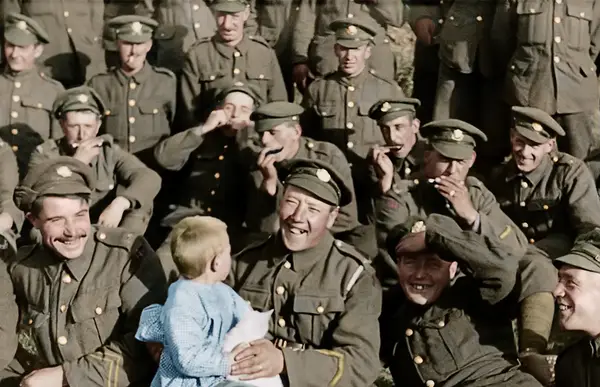
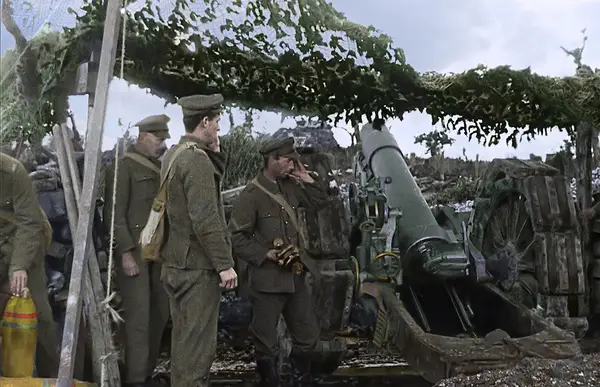
Montpellier will see the French première of an extraordinary new dance and theatre piece about the experience of Indian soldiers in World War I on 26 and 27 June.

Voir l'article
Logo de la revue d'appartenance Speakeasy

Sélection culturelle

To Find a Dragon

Dragons loom large in a lot of children's literature, from Lord of the Rings to Harry Potter, as well as How To Train Your Dragon and Eragon. The theme of dragons sparked the imagination of thousands of British children, who created designs for giant dragon sculptures on view in London's Kew Gardens this summer.

Voir l'article
Logo de la revue d'appartenance Speakeasy

Oral Participation in Class: Ideas from Britain

Aurélie Watts, a French teacher working in the UK, explains some of the techniques commonly used to facilitate oral participation for all pupils in all classes. Techniques that, once put in place, can free up teachers from organisational tasks and multiply learning possibilities in class.

Voir l'article
Logo de la revue d'appartenance Speakeasy

Introducing Thumbs Up! 5e

La collection de manuels Thumbs up! s'agrandit avec l'arrivée dans vos casiers de Thumbs up! 5e. Voici la bande annonce !

Voir l'article

5

Ressources
complémentaires

Logo de la revue d'appartenance Speakeasy

The Incredibles 2

The Incredibles, super-hero family, are back on cinema screens on 4 July. This A1+ downloadable resource gives plenty of opportunities to work on modals, and vocabulary around family members and family life.

Voir l'article
Logo de la revue d'appartenance Speakeasy

Prime Canadian

As Canada Day approaches on 1 July, the Canadian Prime Minister Justin Trudeau has been in international headlines, though not for the reasons the golden boy of Canadian politics has attracted publicity for in his three years in office. This time it was for crossing swords with Donald Trump over trade tariffs at the G7 summit in Quebec. We look at Trudeau's career so far.

Voir l'article
Logo de la revue d'appartenance Speakeasy

Rendez-vous

Cape Town: The Day the Water Stops

South Africa’s second largest city came very close to running out of water in April. Only a massive effort by its citizens has delayed "Day Zero" for now. More and more urban areas face water shortages as a result of climate change.

Voir l'article
Logo de la revue d'appartenance Speakeasy

Fight Plastic Pollution

The theme of World Oceans Day, 9 June, is the problems caused in the oceans by plastic pollution, a subject which is very much in the news at the moment. There are some great videos and teaching resources on this topic. And more to do in Plastic-Free July.

Voir l'article
Logo de la revue d'appartenance Speakeasy

Mandela Day Digital Resources

Mandela Day, 18 July, is a United Nations International Day in honour of Nelson Mandela. The date is his birthday, and 2018 marks the centenary of his birth. As well as our Ready to Use Resource and BioBox quiz, here are some online resources for classroom use about Mandela Day.

Voir l'article
Logo de la revue d'appartenance Speakeasy

New for Sections européennes

If you teach in a European section, have you seen the latest addition to the Speakeasy family? Speakeasy Files 3e is designed for sections européennes with six thematic files giving an original angle on the culture of the English-speaking world. Have a look at our trailer!

Voir l'article
Logo de la revue d'appartenance Speakeasy

Rendez-vous

New Zealand, Where Are You?

It is one of the greatest mysteries of our time — why is New Zealand always being left off world maps? A new video tackles the issue.

Vous avez vu 2130 résultats sur 2567