

















Voir l'article
Logo de la revue d'appartenance Speakeasy

April Fools Fact-checking Resources

April Fools Day is a perfect opportunity to get your pupils thinking about the "news" they see. In 2017, April Fools Day will be followed by International Fact-checking Day, a great occasion to do some media education with your classes, working on fake news.

Voir l'article
Logo de la revue d'appartenance Speakeasy

Sélection culturelle

Beauty and the Beast Again

According to the theme song, it's a "tale as old as time" – the classic fairytale "Beauty and the Beast" returns to cinema screens in a live-action remake of the 1991 Disney animation. Emma Watson stars as a Disney princess who doesn't sit around waiting for anyone to save her.

Voir l'article
Logo de la revue d'appartenance Speakeasy

Rendez-vous

Chuck Berry, Rock and Roll Pioneer

Some say he invented rock and roll. He was certainly one of the first to popularise it. Chuck Berry has died, practically guitar in hand, at the age of 90.

Voir l'article

5

Ressources
complémentaires

Logo de la revue d'appartenance Speakeasy

Red Nose Day

This A1 plus-level article will introduce your pupils to an important and fun British charity event that involves many children across the United Kingdom: Red Nose Day. This fundraising event takes place every second year. In 2017, it is on 24 March.

Voir l'article
Logo de la revue d'appartenance Speakeasy

Rendez-vous

Basic Income: An Idea Whose Time Has Come?

Canada pioneered an experiment on a universal basic income for all citizens in the 1970s. Now, one province, Ontario, has promised another trial. And other countries or regions are also toying with a basic income for all.

Voir l'article
Logo de la revue d'appartenance Speakeasy

Sélection culturelle

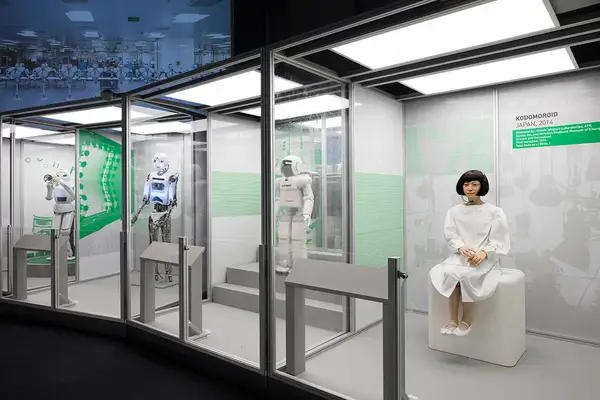
Robots Invade London's Science Museum

Robots seem futuristic, in the realm of science-fiction. But a new exhibition at London's Science Museum traces their history back 500 years. A hundred mechanical wonders have taken over the museum.

Voir l'article
Logo de la revue d'appartenance Speakeasy

Red Nose Day: A Very British Tradition

On 15 March, millions of people in Britain will be “doing something funny for money”… and wearing some very strange red noses.

Voir l'article
Logo de la revue d'appartenance Speakeasy

Sélection culturelle

American Week in Rennes

Chicago is the focus of the first ever American Week organised by the Institut franco-américain in Rennes, from 20 to 24 March.

Voir l'article
Logo de la revue d'appartenance Speakeasy

Sélection culturelle

Detective Story on Stage Around France

San Francisco theatre company Word for Word are back for their annual French tour in March, with a performance of Edward P. Jones noir story "All Aunt Hagar's Children" in Nancy, Angers and Paris.

Voir l'article
Logo de la revue d'appartenance Speakeasy

Hidden Figures: Teaching with Trailers

The film Hidden Figures reveals the untold true story of a team of African-American women mathematicians, or "human computers" who helped the success of the Apollo Moon landings program in the 1960s. These videos are a great follow-up after using our B1-level article and teaching activities with your pupils.

Voir l'article
Logo de la revue d'appartenance Speakeasy

Time to Read: World Book Day

2 March is World Book Day, so grab a book, or bring some book-based fun into your classroom.

Voir l'article
Logo de la revue d'appartenance Speakeasy

Rendez-vous

From Penguins to Steampunk…

Oamaru, a town in New Zealand, is famous for its historical white stone architecture and Blue Penguin Colony. But penguins are not the only reason to stay a while in Oamaru. This town is also famous for its Steampunk Festival, its associated Guinness World Record and because it is now considered as the “Steampunk capital of the world”!

Voir l'article
Logo de la revue d'appartenance Speakeasy

Steampunk Video

Pupils are sure to be intrigued by the larger-than-life visuals and machines that make up the Steampunk universe. This video from the "Steampunk capital of the world" - Oamaru, New Zealand - is a great introduction.

Voir l'article
Logo de la revue d'appartenance Speakeasy

Teaching With Trailers: Lion

Lion is based on a true story, and these two videos work well together, showing the fiction with the trailer, and the reality, with a Public Service Announcement by star Dev Patel for donations to charities helping lost children in India, like the film's hero, Saroo. In the film , Patel (Slumdog Millionaire) plays Saroo, a young man living in Australia. He was adopted as a 6-year-old in India, after accidentally getting on a train in his isolated village and finding himself in Kolkata. Despite a happy family life, as he reaches adulthood, he becomes obsessed with looking at Google Earth satellite photos, trying to recognise his home village. https://www.youtube.com/watch?v=ziOLGzKq6oo The first minute of the trailer is an excellent introduction to the film's concept or "pitch". Even at A2 , pupils should be able to work out Saroo's situation in the first 20 seconds - they should be able to catch "adopted" and  "son" when Patel is drinking champagne with his two white parents (Nicole Kidman and  David Wenham). And as he starts seeing flashbacks of his childhood, again the language is very simple and the images add to comprehension, "I had a mother, a brother..." The next couple of images are in Hindi, with English text onscreen. Then 6-year-old Saroo's terror in the train is easy to understand, as is adult Saroo's, "I have to find my way back home." For A2, you could stop there, as "Based on a true story" comes on screen. From B1 , students should be able to follow the rest of the exposition by combining voiceover, dialogue, on-screen text and the images. With help, they should be able to pick out the speculative questions and statements, "It would take a lifetime to search all the stations in India,"  "What if you do find home and they're not even there?" and piece together what they infer. https://www.youtube.com/watch?v=4dQ1LjLvLMw The makers of Lion are working with children's charities Magic Bus and Railway Children India to raise money to help the 11 million children like Saroo living on the streets in India. The campaign is called #Lionheart . This PSA featuring Dev Patel is easy enough for comprehension from A2 and makes a good factual counterpart to the "factional" version of the true story seen in the trailer.   Lion 22 February

Voir l'article
Logo de la revue d'appartenance Speakeasy

Media Education: Moonlight

Nominated for seven Oscars, Moonlight is a coming-of-age movie about Chiron, an African-American boy growing up in the 1980s and 1990s in a poor housing project in Miami. A short video gives a fascinating insight into how the film was made, and is perfect for working on éducation aux médias et à l'information.

Voir l'article
Logo de la revue d'appartenance Speakeasy

Fighting for the Right to Love

Loving tells the astonishing true story of an American couple who married in 1958 and spent the first nine years of their marriage fighting the segregationist laws that found them guilty of the crime of loving someone who was a different colour. Richard Loving and Mildred Jeter were childhood sweethearts in Virginia. When Mildred became pregnant, the couple decided to marry. But that brought them up against the state’s Racial Integrity Act 1924, which outlawed mixed couples. The Lovings married in Washington, D.C., but returned to live in Virginia, where they were rapidly prosecuted for, miscegenation – the mixing of “races”. The court, perhaps feeling the wind of civil rights change, suspended the prison sentence it imposed and pointed to an easy solution – the Lovings couldn’t live as man and wife in Virginia, but they could elsewhere. The couple returned to Washington, and had three children. But they longed to return to the rural setting and their families down South. In 1964, Mildred decided to do something about their situation. With the help of the American Civil Liberties Union, the couple appealed against their sentence, and challenged the legality of the Racial Integrity Act. In 1967, the Supreme Court, ruled it unconstitutional. Civil Rights Heroes Like many involved in the battle for civil-rights in the U.S.A., Richard and Mildred Loving were reluctant activists. They just wanted to be able to live their lives. They were quiet people, and weren’t keen to court publicity. The press quickly caught on, though to the irony of the couple’s family name: Richard and Mildred Loving were prosecuted for… loving. But their case, like many other milestones in the fight for civil rights, made a major difference for couples who came after them. This would make an excellent Mythes et héros theme, or could also fit into l’idée de progrès . The film’s French distributors have provided a teaching pack for working with the film. The trailer is relatively simple and clear, it's usable from B1. https://www.youtube.com/watch?v=33g-ZHBQdNU These  documentary  extracts on the National Endowment for the Humanities site are an excellent companion to the film trailer. There is written explanation on-screen that is understandable from A2 . The archive footage and interviews is usable from B1 . Loving 15 February  

Voir l'article
Logo de la revue d'appartenance Speakeasy

Sélection culturelle

Oscars 2017: NotSoWhite

The 2016 Oscars received as much publicity for the people and subjects it didn’t honour as the red-carpet dresses or the tearful speeches. The #OscarsSoWhite campaign complained that the nominations to all four top categories only featured white faces and white stories. The 2017 nominations are a radical change.

Voir l'article
Logo de la revue d'appartenance Speakeasy

Rendez-vous

Computers Learn from the Language of Love

Reading romance novels is a relaxing activity for millions around the world. But could it also be a way for computers and robots to become more human? Researchers at Google’s Brain division have been feeding thousands of romance novels into working an artificial intelligence (AI) system to try to encourage the system used in search and apps to understand and adapt better to real human discourse. The researchers fed 11,000 unpublished novels into the neural network, including 3000 romance and 1500 fantasy novels. It then asked the system to produce language to link two sentences taken from the books. The Romantic poets, love-lyricists and writers of Mills & Boon romances don’t have to fear for their jobs yet. The program was trying to mimic variations in human speech, so the productions tend to be repetitive variations on a theme. Sentences are required to be similar in meaning to those that precede and follow them. On the other hand, it could be interesting material for language teaching. This one reads like a grammar activity on reported speech! (The first and last lines each time are those provided by the researchers. Apparently AI systems are no more interested in punctuation than the current generation of texters!) i want to talk to you. i want to be with you. i don’t want to be with you. i don’t want to be with you. she didn’t want to be with him. This one would be great for a creative writing exercise on telling a story in minimal words – pupils could be asked to imagine what “I” said when she/he/it turned to him: there is no one else in the world. there is no one else in sight. they were the only ones who mattered. they were the only ones left. he had to be with me. she had to be with him. i had to do this. i wanted to kill him. i started to cry. i turned to him. Humans and Computers Andrew Dai, one of the Google researchers, hopes this research will lead to improvements in human/computer interaction. He said, “Hopefully with this work, and future work, it can be more conversational, or can have a more varied tone, or style, or register.” It raises the question: Could users choose the tone they are addressed in, as we choose the voice we want to hear giving directions on GPS systems? Given the popularity of Fifty Shades of Grey in retirement homes, will pensioners have flirty chats with their computers? Asked if in future humans could fall in love with computers, Andrew Dai quoted the ancient Greek myth of Pygmalion, who makes a statue of a beautiful woman and falls in love with her. “If you can fall in love with a statue, I don’t see why you couldn’t fall in love with a neural network trained on romance novels.” It’s a long way off from the scenario of the 2013 Spike Jonze film Her in which Joaquin Phoenix’s character fell in love with his AI computer (voiced by Scarlett Johannson). But science-fiction does seem to have a habit of catching up with fact a lot faster than we expect.  

Voir l'article

6

Ressources
complémentaires

Logo de la revue d'appartenance Speakeasy

Valentine's Day

This A1+-level article will shed perhaps a different light on what your pupils think of Valentine’s Day in the U.S.A and in the U.K. The audio activity distinguishing kind and mean messages in Valentine’s poems fits into the media education and citizenship curriculum.

Voir l'article
Logo de la revue d'appartenance Speakeasy

With Love from Loveland on Valentine's Day

Valentine's Day, 14 February, is the day to spread some love. Not necessarily romance, friendship is also celebrated.

Voir l'article
Logo de la revue d'appartenance Speakeasy

Sélection culturelle

Jackie

Seen through the eyes of the iconic First Lady, Jacqueline Bouvier Kennedy (Natalie Portman), Jackie is an intimate portrait of one of the most important and tragic moments in American history: the assassination of President John Fitzgerald Kennedy. President Kennedy's assassination was a generation-marking event not just for Americans but for the millions of people around the world who had seen in JFK an inspirational leader ready to make real and positive changes. For Jackie Kennedy however, it was a personal tragedy and trauma. Even those of us who were not born on 22 November 1963, who can't ask "Where were you when Kennedy was shot?", feel that we know what happened that day. Many previous films, books and documentaries have been devoted to minutely dissect the assassination and the mysteries that still persist about the killer or killers, and their motivation. Changing Perspective Jackie sets out to tell a totally different story. That of a young widow who has just watched her husband be shot in the head and now has to comfort her young children and a nation while also finding a way for herself to grieve. According to scriptwriter and journalist Noah Oppenheim, what kept Jackie Kennedy going was her innate understanding that the aftermath and funeral would shape her husband's legacy. She became determined that he would not be robbed of that legacy by his untimely death, that his short two years and nine months in office would take on iconic status thanks to the staging of the funeral. Oppenheim structured his script around the known facts, then he, director Pablo Lorrain and Natalie Portman, in the role of Jacqueline Kennedy, used that as a basis to imagine the moments in that short week after the assassination for which there is no record. So they imagined Jackie Kennedy in the White House, the home she was soon to leave. With her children, celebrating John Jr's third birthday, which sadly fell on the day of his father's funeral. Discussing with the Attorney General, Robert Kennedy, about his brother's funeral. Wandering the rooms in her blood-stained Chanel suit. Making of an Icon The Kennedy presidency was the first of the televised age. It's important to remember that Jackie Kennedy was a journalist and photographer — she was acutely aware of the importance of image in her husband's legacy. It was she who insisted that President Kennedy's funeral should be based on that of Abraham Lincoln, the beloved president who freed the slaves and also died from an assassin's bullet, she who demanded her right to walk beside her husband's casket in the procession. JFK's funeral was watched by millions around the world. Now we can get a glimpse at the personal tragedy and fortitude behind that public outpouring of grief. As the Natalie Portman points out, "I think every individual will have their own experience of who Jackie is. But the one thing I truly hope is that you see someone who is not just an icon but a very human, complex woman who found her own way through a situation few of us could imagine.”   Jacqueline Bouvier Kennedy in a Nutshell Jacqueline Bouvier was born in on July 28, 1929 , to a wealthy New York family with French ancestry. She excelled at horse-riding and ballet. She studied history, literature, art, and French at Vassar and George Washington Universities, spending a year in Paris. She was a reporter and photographer with a column in The Washington Times-Herald. In 1953 , she married John Fitzgerald Kennedy, then a U.S. Senator. He was elected the 35th U.S. President and in 1962, the Kennedys moved into the White House with their two children: Caroline, 4, and the newly born John Jr. In August 1963, the Kennedys had a third child, Patrick, who died two days later. On November 22, 1963, President Kennedy was assassinated in Dallas, Texas. Jacqueline Kennedy was beside him in the car. His Vice-President, Lyndon B. Johnson was hurriedly sworn-in as President. After leaving the White House, Jacqueline Kennedy created the John F. Kennedy Presidential Library and Museum . In 1968, she married Greek shipping magnate Aristotle Onassis. She was widowed for a second time in 1975 . In the latter part of her life, she worked as a book editor in New York until her death in 1994.  

Voir l'article
Logo de la revue d'appartenance Speakeasy

Rendez-vous

A Giant Fell

The iconic Pioneer Cabin Tree, a giant sequoia tree with a tunnel carved through its base, fell on Sunday 8 January during heavy rains. The tree’s home was in Calaveras Big Trees State Park, 100 miles southeast of Sacramento, California.

Voir l'article
Logo de la revue d'appartenance Speakeasy

U.S. Trips for Low-Income Lycéens

Every year, the American Embassy Youth Ambassadors for Community Service programme allows 20 French lycéens from low-income families to go on an expenses-paid two-week trip to the U.S.

Voir l'article
Logo de la revue d'appartenance Speakeasy

Weather Webpicks

Groundhog Day, 2 February, gives lots of possibilities for revising vocabulary for weather and seasons, considering weather proverbs in English and French, and getting a bit of science into English class.

Voir l'article
Logo de la revue d'appartenance Speakeasy

Sélection culturelle

La La Land: Singing and Dancing all the Way to the Oscars

"La-la Land" is usually an affectionately insulting nickname for Los Angeles, home of Hollywood and purveyor of unrealistic dreams. The film La La Land, however, is a hymn to the City of Angels, the golden age of cinema and musical comedies.

Vous avez vu 1440 résultats sur 1616