














Voir l'article
Logo de la revue d'appartenance Speakeasy

Rendez-vous

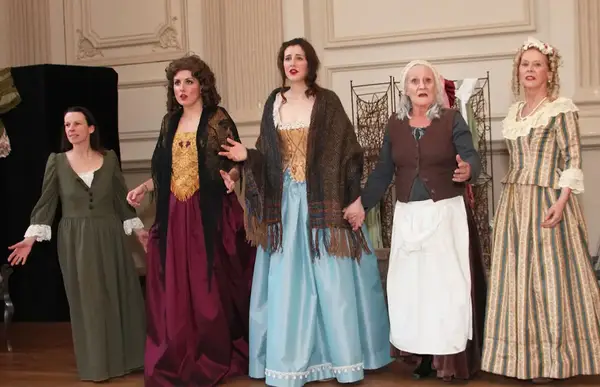
Women Unite

There will be a big event in Washington on 21 January. No, not the Inauguration. The day after Donald Trump enters the White House, women's organisations are calling for women to mobilise to make it clear that they will defend their rights against any threat from the new administration.

Voir l'article
Logo de la revue d'appartenance Speakeasy

Martin Luther King Day on the Web

These videos will help you discuss Martin Luther King Day in class.

Voir l'article

5

Ressources
complémentaires

Logo de la revue d'appartenance Speakeasy

Sing: Animals Have Got Talent

In this A1 towards A2 article, your students will read about Sing (Tous en scène), the animated musical film about a music competition on the principle of TV programmes like Britain’s Got Talent.

Voir l'article
Logo de la revue d'appartenance Speakeasy

Sélection culturelle

Born to Sing

Sing is a feelgood movie about a singing competition designed to save a failing theatre in a city entirely populated by animals.

Voir l'article
Logo de la revue d'appartenance Speakeasy

Teaching with Trailers: Sing

The trailers for Sing, an animated musical film about a singing competition, provide lots of opportunities for language teaching – vocabulary about animals and music, following or telling a simple story, or organising a talent show.

Voir l'article
Logo de la revue d'appartenance Speakeasy

Sélection culturelle

The Queen and her Prime Ministers

The Crown offers a fabulous insight in the British government in the second half of the twentieth century.

Voir l'article
Logo de la revue d'appartenance Speakeasy

Apprendre à apprendre

Comment aider les élèves de trouver les méthodes d'apprentissage que sont les plus efficaces pour eux? La mémorisation est essentielle dans l'apprentissage des langues, mais demeure difficile pour beaucoup d'élèves. Voici des suggestions pratiques pour aider vos élèves d'adopter de nouvelles habitudes.

Voir l'article
Logo de la revue d'appartenance Speakeasy

Rendez-vous

2016: That Was the Year the Was

It's been quite a year of surprises. And definitely not a good one for opinion poll companies and forecasters. From Brexit to Trump, refugee athletes to the rock 'n' roll Nobel Literature laureate, we look back at 2016.

Voir l'article
Logo de la revue d'appartenance Speakeasy

Rendez-vous

Electoral College: the Final Hurdle?

In an exceptional electoral year, there is one more chapter to come in the saga of the 2016 Presidential election. The electoral college, normally a very discreet part of the electoral process, could be the scene of unusual drama on 19 December.

Voir l'article
Logo de la revue d'appartenance Speakeasy

Australia Day

Australians celebrate their national day on 26 January, the anniversary of the first British colonisation of the continent in 1788.

Voir l'article
Logo de la revue d'appartenance Speakeasy

Mobilising Life Skills to Aid Language Learning

Cooperation, problem-solving, decision-making, critical thinking: all of these vital "life skills" can be acquired and mobilised in language class, and contribute to Domaine 2 of the Socle commun : Les méthodes et outils pour apprendre.

Voir l'article

5

Ressources
complémentaires

Logo de la revue d'appartenance Speakeasy

Christmas Shopping

This A1+-level interactive picture and audio will introduce beginners to Christmas vocabulary and Anglophone traditions for the festive season.

Voir l'article
Logo de la revue d'appartenance Speakeasy

Sélection culturelle

Innovative Indian Dance Shows Tour France

Akram Khan, a British-born Bangladeshi dancer and choreographer, brings two shows to France which fuse classical Indian dance and stories with contemporary dance. Catch Until the Lions or Chotto Desh in and around Paris, Miramas, Angers, Sète, Brest or Reims between December and May. The 42-year-old Khan began his professional career at just 13, in Peter Brooks' mammoth production of the Indian epic The Mahabarata , which was nine hours long and toured the world for four years. The young Khan was trained in the classical Indian dance form Kathak, which means "story telling". But from the outset he was interested in other forms of dance too. He vividly describes going from being an introverted nobody at school into the most popular boy in the playground after a performing his version of Michael Jackson's "Thriller". After the long tour of The Mahabarata, he went on to train in contemporary dance. He co-founded the Akram Khan Company in 2000. As a choreographer, Khan has worked with artists as different as actress Juliette Binoche, pop singer Kylie Minogue, artist Anish Kapoor or prima ballerina Sylvie Guillem. He also choreographed part of the London 2012 Olympic Opening Ceremony. Until the Lions Inspired by Karthika Naïr's poetry collection Until the Lions: Echoes from The Mahabarata , Khan decided to revisit the Hindu epic, but to focus on the female characters who are never centre-stage in the original. The title is taken from an African proverb, "Until the lions have their own historians, the history of the hunt will always glorify the hunter." Or, history is always told by the victors. The show tells the story of Amba, a princess who is abducted on the day she was to choose a husband. Bheeshma, the prince who abducted her, has taken a vow of celibacy, so won't marry her. But she has lost her honour in the eyes of her own people, and is considered unmarriagable. She vows revenge and undertakes years of penance before she has a vision telling her she will destroy Bheeshma in her next life. She kills herself and returns as an ambivalent female/male character, Shikhandi, who will kill Bheeshma in battle. Akram Khan plays Bheeshma, Ching-Ying Chien plays Amba and Christine Joy Ritter plays Shikhandi. In an interesting coincidence, the voiceover is by Kathryn Turner, who is playing in Peter Brooks' The Valley of Astonishment in Paris at the same time as Until the Lions' Paris run. This is definitely not Bollywood. The colours are sober and the emotions powerful. The music is an integral part of the show, which is played in the round, on a cleverly engineered stage which resembles a cut section of a tree trunk. The musicians are in full view, around the stage and using it for percussion. The whole effect is mesmerising. https://www.youtube.com/embed/6xtrmMwNABU Chotto Desh Chotto Desh means "little homeland" (Bangladesh is "the homeland of the Bengali people"). It is a child-friendly reworking of Desh , a Akram Khan 80-minute solo piece drawing on his own experiences and ancestry, weaving together Bangladeshi and British myths. Find all the dates for both shows around France below. You can find more information about reservations on the Akram Khan Company site. Until the Lions Till 17 December 2016 La Grande Halle de la Villette, Paris 19 16 February 2017 Le Quai, Angers (49) 21-22 February 2017 Scène Nationale de Sète et du Bassin de Thau Sète (34) 26-27 February 2017 Le Quartz, Brest (29) 3-4 March 2017 Opéra de Reims (51) 21- 23 April 2017 Théâtre des Gémeaux, Sceaux (92) 5-6 May 2017 Théâtre-Sénart Lieusaint (77)   Chotto Desh 26- 30 December 2016 Théâtre des Abbesses, Paris 18 26-28 January 2017 Espace 1789, Saint-Ouen (93) 31 January 2017 Théâtre des Bergeries, Noisy Le Sec (93) 9-11 March 2017 Maison de la musique, Nanterre (92) 21 March 2017 Théâtre de la Colonne, Miramas (13) 21 April 2017 Théâtre Romain Rolland, Villejuif (94)

Voir l'article
Logo de la revue d'appartenance Speakeasy

Sélection culturelle

Rogue One: A Star Wars Story

New story, new characters — Rogue One is not Star Wars Episode VIII but a stand-alone film exploring one of the mysteries of the saga: How did the Rebel Alliance get the Death Star plans?

Voir l'article
Logo de la revue d'appartenance Speakeasy

Christmas on the Web

'Tis the season to be jolly! Before the winter holidays, why not do a little cultural comparisons, looking at how Christmas is celebrated in English speaking countries in the northern and southern hemisphere? These digital resources will help you.

Voir l'article
Logo de la revue d'appartenance Speakeasy

Rendez-vous

Space Pioneer Dies

John Glenn was both the American to orbit the Earth, and the oldest human to go into space, when he participated in a Space Shuttle mission at the age of 77. He died on 8 December at the venerable age of 95.

Voir l'article
Logo de la revue d'appartenance Speakeasy

Measure for Measure

Comment deux matières comme les mathématiques et l’anglais peuvent-elles se rencontrer ? Hamid Belhadia et Cécile Clavilier, professeurs en 3ème section européenne en ZEP, témoignent de leur expérience. Nous avons mené ce travail commun sur l’année de troisième, en anglais et en mathématiques, la DNL (Discipline Non-Linguistique) pour cette classe. “From Measures to Bridges” s’ancrait sur les notions de mesures pour aboutir aux ponts. Un voyage linguistique et thématique concluait l’année en illustrant notre projet in situ. Rapprochements Un pont est une structure architecturale qui a ses dimensions et caractéristiques propres (longueur, largeur, hauteur, volume, forme) et répond à des lois physiques et mathématiques. Ainsi la notion de mesure lui est intrinsèquement liée. Défini singulièrement par sa location, le pont est également le produit de son époque. A ce titre, son édification s’inspire de l’ingénierie et de l’architecture du moment, ce qui nous permet de le situer dans le temps. Tout en étant concrète, la notion de pont a une portée métaphorique, symbolisant un rapprochement entre deux rives qui, a priori, n’ont pas de raison d’être reliées. Celles-ci peuvent aussi bien représenter les mathématiques et l’anglais que les peuples français et anglais (histoire, culture et civilisation), donc un travail commun et une ouverture vers l’autre. Au-delà, le pont dépasse l’idée de frontière, puisque lorsque vous êtes sur celui-ci, vous n’êtes ni d’un côté, ni de l’autre de la rive. Ainsi, vous n’êtes plus cloisonné dans un seul lieu, mais, plus poétiquement, en un entre-deux, qui rend tout possible en s’émancipant des appellations. De fait, un travail interdisciplinaire est un pont entre plusieurs matières. Il n’est pas circonscrit à l’une d’elles : ce ‘‘no man’s land’’ ouvre de nouvelles perspectives d’approche des connaissances. Séances de travail Après avoir choisi en commun les thèmes que nous allions traiter et l’approche qui nous conduirait des mesures aux ponts, la répartition du travail s’est faite entre les professeurs de mathématiques et d’anglais. Mesures françaises et anglaises – histoire de la mesure Le mètre, « invention » française liée aux bouleversements consécutifs à la Révolution Française, porte en lui les valeurs d’égalité. Il fut défini par le 1/10 000 000 du quart du méridien terrestre ; les astronomes Delambre et Méchain se servirent de la triangulation pour calculer la longueur du méridien. Cette valeur du mètre a été rapidement reconnue à travers l’Europe et, depuis, internationalement – sauf par l’Empire Britannique et certaines de ses anciennes colonies, qui ont conservé les mesures impériales. Gravitation – rappel de ces lois physiques et un historique sur Newton. Des activités pédagogiques propres à ces notions ont suivi sur plusieurs séances. (Utilisation de supports vidéo authentiques – BBC – en mathématiques). Thèmes abordés par le professeur d’anglais The History of Measurement The Greenwich Meridian Cambridge and the Mathematical Bridge Newton The Channel Tunnel Tower Bridge and the Millennium Bridge Activités du professeur de mathématiques Conversions: imperial and metric units (video activities), exercises about proportionality Exercises about triangulation: trigonometry, sine rule Laws of gravity: (video activities), exercises on masses and weights; functions and straight lines Meridian: sphere, latitude and longitude Le voyage, illustration du projet Le séjour s’est organisé autour du projet scientifique en liaison avec le programme d’histoire de troisième : la Deuxième Guerre mondiale ; en anglais, section européenne, Londres, le Blitz et Churchill. Sur place : Visite de la cathédrale St Paul ; Christopher Wren utilisa la géométrie et les mesures pour la construction du dôme de la Cathédrale et de son escalier géométrique. On aborde les bombardements de la Cathédrale sous le Blitz et funérailles de Churchill. Visite du "Churchill’s Britain at War Experience" pas très loin du Millenium Bridge. Une journée à Greenwich : l’observatoire, le méridien et le planétarium. Une journée à Cambridge : Le "Mathematical Bridge" construit, selon la légende, par Newton ; visite guidée des "Colleges" ; Newton a étudié à Trinity College, ses recherches sur la gravitation y sont conservées à la bibliothèque. London Science Museum  : le département mathématiques, riche de nombreuses expositions, à exploiter avec le collègue de mathématiques. Les "Hands-on Galleries" : ateliers thématiques permettant de mener une expérience, par exemple : "How to build a bridge". Churchill War Rooms : le Quartier Général (souterrain) du premier ministre pendant la guerre, et un musée qui retrace sa vie. Pendant le séjour et les visites, les élèves devaient remplir un carnet de voyage (questions, interviews, énigmes) à remettre au retour. Bilan Ce voyage a largement dépassé nos attentes en termes scientifiques et culturels. Nous-mêmes avons appris beaucoup. Les élèves ont à plusieurs reprises cherché à prolonger ce qui avait été abordé en cours en posant des questions inattendues aux guides qui nous encadraient. Ce voyage fut aussi un révélateur sur le plan humain. Un soir, des footballeurs ont invité nos élèves, qui les regardaient en attendant leurs familles, à les rejoindre pour une partie improvisée. Il a bien fallu parler anglais ! Ce projet a permis de relier des enseignements à une réalité linguistique, scientifique et historique. Il a su légitimer la nécessité d’un savoir peu visible pour les élèves et permis de dresser des passerelles entre différentes disciplines.

Voir l'article
Logo de la revue d'appartenance Speakeasy

Sélection culturelle

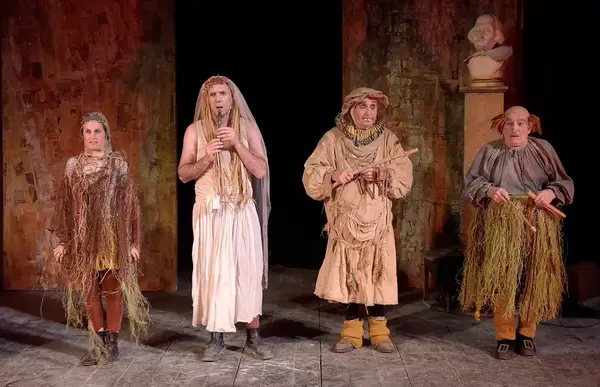
Peter Brook: The Valley of Astonishment

Back by popular demand, the legendary director Peter Brook's The Valley of Astonishment in Paris.

Voir l'article
Logo de la revue d'appartenance Speakeasy

Australia Digital Resources

Australia, with its topsy-turvy seasons and love of sport and the great outdoors, is a rich subject for language and cultural learning. These audio resources with interactive activities are a great starting point.

Voir l'article
Logo de la revue d'appartenance Speakeasy

Rendez-vous

High-School Science Heroes

When they see injustice in the world, some teenagers take to the streets, or social media to demonstrate. And some take to the science lab. A group of high-school students in Australia have just synthesised an essential medical drug that is atthe centre of a pharmaceutical pricing scandal in the U.S.A.

Voir l'article
Logo de la revue d'appartenance Speakeasy

Débat: Littérature, langues étrangères et éducation positive

Lundi 5 décembre au Salon du livre et de la presse jeunesse à Montreuil, assistez à une table ronde autour de l'éducation positive et la collection Tip Tongue, qui encourage la lecture cursive en partant du français en passant petit à petit en anglais, en espagnol ou en allemand.

Voir l'article
Logo de la revue d'appartenance Speakeasy

Pearl Harbor Online Resources

Seventy-five years ago, the surprise Japanese attack on the American naval base of Pearl Harbor in Hawaii was the signal for America to join World War II. These videos, sites and slideshows provide useful material for class use, about the attack and U.S. entry into the war, and about the camps where Japanese Americans were hastily moved.

Voir l'article
Logo de la revue d'appartenance Speakeasy

Win 1500 Euros for a Class Project About Australia

Collège and lycée classes can participate in the Sadlier Stokes Prize about Australia's participation in World War I. The competition is open to all disciplines, and is ideal for an EPI or cross-disciplinary project with history-geography, French or EMC for example.

Voir l'article
Logo de la revue d'appartenance Speakeasy

Sélection culturelle

Shakespeare Lives in Schools Day

Friday 2 December is Shakespeare Lives in Schools Day around the world, part of the commemorations of the 400th anniversary year of the Bard's death. William Shakespeare died on 23 April 1616, at the age of 52, in his native Stratford-upon-Avon. Yet his 37 plays are still played constantly around the world, and have provided the basis for more than 1000 films. Britain had had grandiose plans for celebrating the tercentenary of Shakespeare's death in 1916 before World War One put an end to that. So no effort has been spared to celebrate the 400th anniversary. Approximately half of the world's schoolchildren study a Shakespeare play at some point, so schools have been a big focus for the 400th anniversary celebrations, and particularly the British Council's Shakespeare Lives programme. It aims to show that Shakespeare's concerns and themes are still eminently relevant today. Even if Shakespearean language makes studying the actual plays in an EFL classroom difficult, there are lots of ways to expose learners to "Britain's Number One Cultural Icon". There are lots of ideas for celebrating 2 December in the Shakespeare Lives in Schools Day teaching pack, which includes Shakespeare masks for pupils to cut out and wear, and quotes cards for them to distribute. Contemporary short films in modern language, songs, animations, an interactive film from the reconstructed Shakespeare's Globe theatre and Powerpoint presentations all provide opportunities to discuss Shakespeare with different levels of classes. We've got lots of suggestions in our Webpicks.  

Vous avez vu 1470 résultats sur 1603