
















Voir l'article

5

Ressources
complémentaires

Logo de la revue d'appartenance Speakeasy

What's in the News?

This article and worksheet will let you work with pupils at levels A2-B1 on media literacy and fake news. It provides lots of preparation for our student journalism competition.

Voir l'article
Logo de la revue d'appartenance Speakeasy

Journalism Competition for Your Classes

Don't miss the deadline. We're inviting your "Cycle 4" pupils to write their own articles to send us and we'll publish our favourites on Speakeasy-News. Send us their work by 10 May.

Voir l'article
Logo de la revue d'appartenance Speakeasy

Sélection culturelle

Are You Ready to Play?

Two months after his historical movie about the Pentagon Papers affair, starring Tom Hanks and Meryl Streep, Steven Spielberg returns to the science-fiction genre with "Ready Player One".

Voir l'article
Logo de la revue d'appartenance Speakeasy

Teaching with Trailers: Ready Player One

Ready Player One is set in a universe many pupils recognise – that of video games and virtual reality. The trailer is relatively simple in terms of speech and very rich visually, so it's a great classroom resource from A1+.

Voir l'article
Logo de la revue d'appartenance Speakeasy

Sélection culturelle

Expert Discussion about Fake News

Fake news never seems to be out of the news at the moment, with more and more governments and organisations stressing the importance of making pupils aware of it. The American Library in Paris is hosting a discussion panel about fake news on Tuesday 20 March at 7.30 p.m. Perfect timing for the Semaine de la presse à l'école !

Voir l'article
Logo de la revue d'appartenance Speakeasy

Stepping Up

From 17 to 23 March, Britain is breaking out the running shoes and swimming costumes for Sport Relief, Red Nose Day's sporting cousin. A whole lot of comics, celebrities, schools and the great British public will take on sporting challenges to raise money for those in need in Britain and some of the poorest communities in the world.

Voir l'article
Logo de la revue d'appartenance Speakeasy

Sport Relief Webpicks

From schools playing Harry Potter-inspired quidditch matches, to mass runs and cycles, Sport Relief (17-23 March) provides plenty of themes for language learning: charities and solidarity, sport, exercise and health.

Voir l'article
Logo de la revue d'appartenance Speakeasy

Rendez-vous

Stephen Hawking: Death of A Scientist

Professor Stephen Hawking, possibly the most famous modern scientist, has died at the age of 76, after beating enormous odds to survive and work for 55 years with the debilitating motor neurone disease.

Voir l'article
Logo de la revue d'appartenance Speakeasy

Sélection culturelle

Peter Brook Production in Paris, Thonon and Clermont-Ferrand

Veteran British playwright and director Peter Brook’s new production is "The Prisoner". It has opened in Paris before moving on to Thonon les Bains and Clermont-Ferrand.

Voir l'article

5

Ressources
complémentaires

Logo de la revue d'appartenance Speakeasy

Arctic Mystery

This B1 article will allow pupils to discover the mysterious disappearance of the 1845 Franklin Expedition to find the North-West passage, and the subsequent search expeditions and forensic archaeology which has begun to provide answers

Voir l'article
Logo de la revue d'appartenance Speakeasy

ULIS Begins with You

Although pupils with cognitive disabilities, who are based in ULIS classes, are more and more standardly integrated into mainstream lessons, language teaching is often overlooked. Yet it is vital for their job prospects, and simple, innovative methods can make the experience enriching for all the pupils in the class, as well as their teacher.

Voir l'article
Logo de la revue d'appartenance Speakeasy

Frederick Douglass: Civil Rights Pioneer

2018 marks the 200th anniversary of the birth of one of the most important figures in the fight for the abolition of slavery in the U.S.A: Frederick Douglass. Yet he is often unknown outside of America.

Voir l'article
Logo de la revue d'appartenance Speakeasy

Frederick Douglass on the Web

On the occasion of Frederick Douglass's Bicentennial, there are lots of online resources to help you introduce this major figure of the abolition movement to your pupils. This section on Frederick Douglass from the Library of Congress children’s site is suitable from A2 . It’s not a very detailed biography but has an excellent quote from Douglass which is understandable: "What was possible for me is possible for you. Do not think because you are colored you cannot accomplish anything. Strive earnestly to add to your knowledge. So long as you remain in ignorance, so long will you fail to command the respect of your fellow men." The part about his writing and speaking on abolition can be used at the same level. There are segments on his escape from slavery and work during the Civil War in two further sections but they assume a certain pre-knowledge of his story, or at least how slaves escaped to the North and the dangers they faced. This National Endowment for the Humanities mini-site has several interesting documentaries on slavery and the movement for civil rights. The one on the Abolitionists starts with a short segment on Frederick Douglass. The voiceover is clear and fairly slow, but some of the vocabulary is difficult. It could be tackled from B1 . Frederick Douglass’s house in Washington, D.C. in is a National Park Service property preserved for historical reasons. Extracts of the NPS biography of Douglass can be used from A2+. This video shows reconstructions of Douglass’s speeches, and African-Americans young and old saying what he means to them. From A2+. A Powerful Voice The power of Douglass's words is undiminished, and although the language is sophisticated it is well worth investigating Douglass's own words with advanced students. The Teaching American History site has a number of extracts, along with audio readings of them for download . It is easy to understand why people in his lifetime struggled to believe that such eloquence could come from a man who had been treated like a beast. Give me five! 4e Unit 5 "Journey to Freedom" focuses on Harriet Tubman and the Underground Railroad. It would fit well with a sequence on Douglass. Download a sample page here .         The 2019  Pulitzer Prize for history was awarded to historian David W. Blight for Frederick Douglass: Prophet of Freedom . Professor Blight is Director of the Gilder Lehrman Center for the Study of Slavery, Resistance, and Abolition at Yale University. In these two videos, he discusses Douglass. The first one is very short, just 35 seconds. Professor Blight briefly describes the important of Douglass's work, without mentioning his slave past. It's clear and fairly slow. Usable from A2 . https://youtu.be/_B8o4AMUDts The second one is more complex, and longer.  It covers five aspects of his life, from slavery until his involvement in the Civil War. Usable from B1 . The third point is the most difficult in terms of language. https://youtu.be/mcC0-Rvd2-0    

Voir l'article
Logo de la revue d'appartenance Speakeasy

Sélection culturelle

American Theater in Angers, Nancy and Paris

San-Francisco-based theater company Word for Word has announced its annual tour in France. Once again the company will bring prose (five short stories) to life on stage using their original technique.

Voir l'article
Logo de la revue d'appartenance Speakeasy

Funding for Exchanges with the U.K.

A scheme administered by the British Council offers funding for school exchange projects for 17-to-19-year-olds: up to £10,000 per project. The deadline for applications for the next awards of funds is 14 May 2018.

Voir l'article
Logo de la revue d'appartenance Speakeasy

Rendez-vous

Students Demand Gun Control

After yet another school shooting in the U.S.A., surviving students from Marjory Stoneman Douglas High School in Parkland, Texas, are calling for gun control. Their calls have already sparked plans for action such as a national march and two planned school walkouts.

Voir l'article
Logo de la revue d'appartenance Speakeasy

Gun Control Teaching Resources

After the terrible school shooting at the Marjory Stoneman Douglas High School in Parkland, Texas, gun control is once again very much in the news. Here are suggestions of ways to broach this topic in class.

Voir l'article
Logo de la revue d'appartenance Speakeasy

Sélection culturelle

The Shape of Monsters

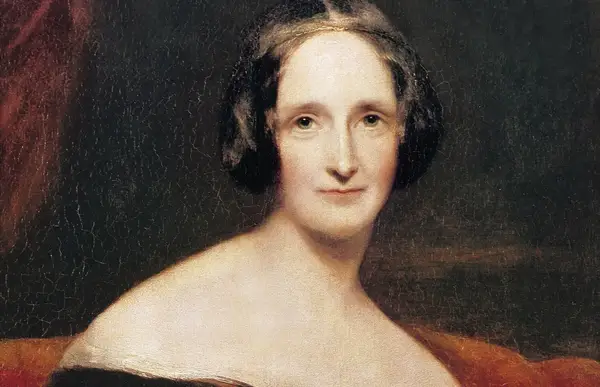
Despite the breath-taking effects, at its heart The Shape of Water is a good old-fashioned monster story. Two hundred years after the publication of Frankenstein , it’s the tale of shunned outsiders who show more humanity than the “normal” humans. Guillermo del Toro’s latest film is set in 1962 Cold War America. The military have captured a mysterious, humanoid water creature that Amazonian tribes worshipped as a god. It is being held captive in a tank in a top-secret laboratory while government scientists study it. One of the cleaning staff, Elisa, who is mute following a childhood trauma, develops a connection with the creature. She is convinced it’s not the monster its captors perceive, but no one will listen to her pleas. https://www.youtube.com/watch?v=XFYWazblaUA Elisa is portrayed by British actress Sally Hawkins ( Made in Dagenham, Blue Jasmine…), while her friend and collea gue Zelda is played by Octavia Spencer (The Help, Hidden Figures…). The Cold War, military setting provides an amplified version of society's tendency to be hostile to anyone and anything outside the norm. Elisa, her African-American colleague Zelda and of course the creature are all outsiders. In a tradition that runs from Beauty and the Beast to Frankenstein to The X-Men , the outsiders will have to prove more "human" than their persecutors. And the Winner Is… The film has already received several awards and 13 Oscar nominations. Accepting the best director award at the British BAFTA awards on 18 February, Del Toro paid homage to Mary Shelley: "She gave voice to the voiceless, and presence to the invisible, and showed me that sometimes to talk about monsters, we need to fabricate monsters of our own. And parables do that for us.”  Coming soon: A Ready to use Resource on the bicentenary of Frankenstein .    

Voir l'article
Logo de la revue d'appartenance Speakeasy

Rendez-vous

Australian Identity Crisis

On 26 January every year, ceremonies are held all over Australia to welcome new citizens as part of Australia Day celebrations. But the 2018 national day was overshadowed by debates about citizenship, and about finding a date for Australia Day that is less offensive to Aboriginal people. Citizenship was a major issue in the Australian parliament in 2017. In April, Malcolm Turnbull’s government announced tougher rules for obtaining citizenship, requiring four years' residence instead of one, and introducing more thorough English-language tests and interviews checking that applicants accepted "Australian values"». But in August, a parliamentary crisis began which soon touched Turnbull’s governing coalition. Eleven MPs and senators resigned voluntarily or after court proceedings. What heinous crime had they committed? Holding a second nationality — often without knowing. Section 44 (i)  of Australia’s Constitution, dating from 1901, says that any person who " is under any acknowledgment of allegiance, obedience, or adherence to a foreign power, or is a subject or a citizen or entitled to the rights or privileges of a subject or a citizen of a foreign power... shall be incapable of being chosen or of sitting as a senator or a member of the House of Representatives" . In an immigrant nation where more than 26% of citizens were born overseas, and one in two has one or both parents born abroad, it is not rare to have more than one nationality. Some countries automatically bestow citizenship on anyone born there. Others consider even second or third generation offspring of emigrants to be potential citizens. Constitutionalists say that candidates for election should check on their nationality status, and renounce any other nationalities they may hold. Rather a contrast with the joyful citizenship ceremonies held all over the country on Australia Day for new citizens – 35,000 in 2018. Change the Day Australia Day commemorates the date in 1788 on which the first British penal colony was founded on the Australian continent. Although there were holidays in various parts of Australia on 26 January from 1818, it was only formally recognised as the national day in 1946. By that time, Aboriginal people had been protesting against the commemoration for eight years, marking a Day of Mourning instead. For them, 26 January doesn’t mark the beginning of a country, but the end of one, and the beginning of many decades of mistreatment by the colonists. Richard Weston, a Torres Strait Islander and CEO of the Healing Foundation which advocates for Aboriginal affairs, explains: “For most Aboriginal people and Torres Strait Islanders, January 26th is a reminder of the pain and loss caused by 230 years of dispossession, dislocation and mistreatment. It is impossible to celebrate when it brings to mind the deep hurt borne by our ancestors and how that suffering continues to impact today.” This video shows the reaction of a number of Aboriginal people and Torres Strait Islanders of different ages to Australia Day: https://youtu.be/G8czHlPYXew The movement to Change the Date has been slowly growing, but in 2017 came to national prominence. The 2018 Invasion Day Rally in Melbourne was attended by 40-60,000 protesters, well outnumbering the official Australia Day ceremony. Find a Date So what date could be substituted for 26 January? 1 January has been mooted, because it was the date in 1901 in which Australia officially came into being as one country. 12 Marc h would celebrate the naming of Canberra as capital city in 1913. Perhaps the most symbolic of reconciliation would be 27 May , the date in 1967 when a referendum voted to include Aboriginal and Torres Strait Islander people in the Census, and allow Parliament to legislate for them. In effect it is the day on which Aboriginal people became Australian citizens. The referendum received an overwhelming majority – 91 per cent voted in favour. Since 1996, 27 May has marked the beginning of the annual National Reconciliation Week . Spirit of Australia The Give me five 4e textbook has a whole unit on the Spirit of Australia. Download a sample double-page here .

Voir l'article
Logo de la revue d'appartenance Speakeasy

Pentagon Papers Webpicks

The Steven Spielberg film "The Post", starring Meryl Streep and Tom Hanks, is an excellent resource for working on the press and the media as part of éducation aux médias. It would work very well with the theme for this year's Semaine de la presse à l'école: Where does the news come from?

Voir l'article
Logo de la revue d'appartenance Speakeasy

Robert Burns Digital Resources

Scots celebrate their national poet, Robert Burns, on 25 January each year. These ebooks are useful for classroom work about the poet and the event.

Voir l'article
Logo de la revue d'appartenance Speakeasy

Sélection culturelle

Publishing the Pentagon Papers

In this era of fake news, Stephen Spielberg’s latest film looks back at the true story of the Pentagon Papers. Publishing news of this leaked government report put investigative journalists and newspaper publishers at real risk of prosecution. And yet, against the odds, they went ahead and set the scene for the Watergate scandal. The Post tells the story of the "Pentagon Papers" – a leaked top-secret government report entitled "History of U.S. Decision-making in Vietnam, 1945-66". The report showed that four successive presidents, Truman, Eisenhower, Kennedy and Johnson, had misled the public about U.S. operations in Vietnam, ostensibly pursuing a strategy towards peace while the military and CIA were covertly expanding the war. The New York Times obtained the leaked 7,000-page report and after failing to interest Congress members in its contents, set up a secret team of journalists in a hotel for three months to comb through the report to find and verify stories. On 13 June, 1971, they published the first of a planned series of articles. On 15 June, the Nixon Administration obtained a court injunction to stop them publishing any further stories. Publish and be Damned? This is where the dilemma at the heart of the film starts. The Washington Post managed to obtain a partial copy of the report. Its publisher Katharine Graham and editor Bradlee had to decide whether to publish, sure in the knowledge that the Administration would seek an injunction against The Post too. The paper was in a fragile state financially, and about to launch a public shares offer to bolster its capital. A legal action would not appeal to investors. Publication could mean financial ruin for Graham's family, the loss of their livelihoods for the staff, and a real risk of going to prison. And yet… telling the story meant standing up for the thousands and thousands of lives that had been sacrificed in Vietnam. https://www.youtube.com/watch?v=nrXlY6gzTTM Their Day in Court Graham gave the go-ahead to publish and The Post was duly added to the Times legal action. But on 30 June, the Supreme Court examined the injunction and overturned it. In the judgement, Justice Hugo Black wrote: “In the First Amendment the Founding Fathers gave the free press the protection it must have to fulfil its essential role in our democracy. […] In my view, far from deserving condemnation for their courageous reporting, the New York Times, the Washington Post, and other newspapers should be commended for serving the purpose that the Founding Fathers saw so clearly. In revealing the workings of government that led to the Vietnam war, the newspapers nobly did precisely that which the Founders hoped and trusted they would do.” For The Washington Post it was the beginning of a new era. From a slightly provincial paper it took on a national stature. The following year, it was The Post 's Carl Bernstein and Bob Woodward who broke the Watergate scandal that led to Nixon's resignation. 1971-2017 Same Combat Although set in 1971, Spielberg's film is astonishingly contemporary. The team investigation of leaked papers echoes recent scandals like the Paradise and Panama Papers which have been revealed by an international syndicate of investigative journalists and newspapers. The film's central figure is a strong female role – the publisher Katharine Graham, the first woman to helm a national newspaper. Katharine Graham (Meryl Streep) wasn't a journalist. The Post had been in her family since her financier father bought it in 1933. In 1946, Katharine Graham's husband, Phil, took over as editor. In 1963, he committed suicide and Graham, housewife and mother of four, found herself at the head of a national newspaper. By 1971, she had found her feet, but the Pentagon Papers would be the test that would turn her into the formidable and respected publisher she became, the first woman to head a Fortune 500 company. Like last year's Spotlight , also about investigative journalism, The Post has been nominated for Best Picture Oscar, as well as a nomination for Streep as best actress. In a post-truth world, the story of women and men willing to risk all to tell the truth has truly struck a note with audiences and awards juries alike.

Voir l'article
Logo de la revue d'appartenance Speakeasy

Sélection culturelle

Three Billboards and a Mother's Fury

The lead role in Three Billboards Outside Ebbing, Missouri fits Frances McDormand like a glove. The story of a fierce, unconventional woman touched by tragedy in small town America, it’s honest and brave, like its star.

Voir l'article
Logo de la revue d'appartenance Speakeasy

Sélection culturelle

Hamilton Musical Arrives in London

"Hamilton", a hip-hop musical about one of America's Founding Fathers, is one of the most unlikely Broadway hits ever. It is finally arriving on this side of the pond, playing to sold-out houses in London's West End.

Vous avez vu 1230 résultats sur 1603